The Road - A complete and total must see. It's imaginative and real and a film that filmmakers should aspire to. It leaves out the unnecessary answers that people often complain about; there's no explanation for the post-apocalyptic world, or how the mother died. It's just a bare bones story about a father protecting his son and surviving in the craziest of worlds. The film even lacks a real depthful plot; they just have to get to the coast where hopefully it's better.
The kid at times is slightly annoying, but what 10 year old isn't? The real plot of the film involves the duo keeping their moral sanity in a world where people are doing anything and everything to stay alive, from stealing to eating each other. The father establishes this when he tells his son that they'll stay good, they have to because they're carrying "the fire" within themselves. The film does ask some pertinent questions and establishes a scenario that feels frightening close to our current world. What would you do to survive? How close to you get to the blurry line between good guy and just surviving? The father teeters closer and closer to that line to protect his son, while trying to keep him as good as possible. In a way, the father protects his son from getting close to that, by crossing the line himself.
In a world, where banks have collapsed, homes taken, and formally well-off people one paycheck away from starving, this film really hits home to how close we are to utter chaos.
Nosferatu - What happens when you can't get the rights to a book? Just change the names of the characters. That's what the producers of this silent horror classic did. Nosferatu is basically the Bram Stoker's Dracula. In fact, it is Bram Stoker's Dracula, except they call him Nosferatu. It follows the same story, guy goes to Nosferatu's house out in Transylvania, Nosferatu becomes obsessed with guy's wife, he travels back to get that wife, yadda yadda. Except, the guy never does anything redeeming, while getting home he ends up in the hospital and the wife ends up killing the vampire by tricking him. The story is so horrible, the second half of the film seems like it fell off a cliff. They spend an hour setting the whole story up, establishing Nosferatu as a creepazoid, then the "second half" is maybe 25 minutes. They cut out the vampire killer, the main guy is incapacitated for the second act, they rush through the ending....this shouldn't be a classic.
The one redeeming thing that makes it such, is Max Shreck as the creepazoid vampire. Bravo! I think this guy actually became a vampire to get into the role. I should mention one other redeeming aspect; the third person cue cards. They're written by some narrator, who is writing them like a book, relating the things he's been told. In a way, it comes off as cheating, since he explains a lot, and it's kind of like useless narration, but really, it adds to the weird and dark nature of the film. Many films have followed this form into sound films, with an outside narrator creepily telling the story as if it's all real. That's how it came off, this narrator was telling us the details of the story as if they're real, explaining certain details, but leaving out others because he doesn't know or it's a mystery. That adds to the atmosphere in a big way.
Although this is a landmark in horror, that inspired so many others, it isn't scary, nor well told, leaving you to snicker at times and never get engrossed except when Nosferatu is around.
Thursday, July 29, 2010
Wednesday, July 21, 2010
Horton Hears A Who
Emperor's New Groove all over again? An animated movie praised by people that has trouble with anachronisms. Almost. Horton Hears a Who does struggle with using too many out of place pop culture references, but the story, characters, and animation are better. But that comparison means nothing, it's like comparing an apple with a worm in it and a banana that punches you.
Horton comes at us right at the tail end of the animation revolution started by Pixar and DreamWorks, now taken up by other companies around town like Sony. These films bank on the grey area between kids and adults, trying to make a film funny for both, but smart enough for adults to relate to. Horton is no different, with enough visual gags for the kids to love, mixed with pop culture references that will make idiots chuckle, and a decent enough story to keep everyone generally entertained. (Except Betsy, who fell asleep.) The story is so easy, it's like a Frank Capra film.
Indeed, it is exactly like a Capra film. At least the story. anyway. A simple man, Horton, with a problem; no one believes him that a speck has a city on it, or in it. Then another man (the speck Mayor) can't convince everyone that their city will be destroyed because they're a speck. What dilemmas! There isn't much they could do with the story, and it's good they didn't change too much, because that's the heart and soul of the Dr. Seuss book it's based on. Not, as sometimes is assumed, squiggly buildings and odd rhyming.
But the animators seem to think that to build a believable Seuss world, all you need are those two things. I found myself annoyed that the speck city of Whoville was like all the other worlds created by unimaginative animators; just our world, but slightly odd looking. I thought they really had a chance to make a great world, with interesting things and places. Something with depth. But instead, it's maybe the most generic Seuss world of any adaptation. Even the jungle, where there isn't much to work with, they had some cool locations, and really fascinating characters. Even the Cat in the Hat movie was more imaginative and exciting. But the weirdness of Whoville comes down to Bert from accounting and the mayor having 96 kids. Is that from the book, or are they trying to be cute?
Oh well, the movie was kind of funny, even with Jim Carrey's over-the-top but still super duper kid friendly voice, and the story was enjoyable, keeping to the original message. But animation shouldn't be merely humdrum; it's the place, one of the few left, where imagination has free reign and we can be truly wowed. Instead, we have a flat world and are given an REO Speedwagon singalong as a climax.
Least Imaginative Animated Worlds
5. Horton Hears a Who - They have a website called whospace.
4. The Emperor's New Groove - Is this ancient Peru? Sounds more like the OC.
3. Bee Movie - It was just jokes, no sense of reality to the Bees' world.
2. Shark Tale - A fire hydrant? Underwater? Is that supposed to be a joke?
1. Cars - I've mentioned this movie way too much before.
Horton comes at us right at the tail end of the animation revolution started by Pixar and DreamWorks, now taken up by other companies around town like Sony. These films bank on the grey area between kids and adults, trying to make a film funny for both, but smart enough for adults to relate to. Horton is no different, with enough visual gags for the kids to love, mixed with pop culture references that will make idiots chuckle, and a decent enough story to keep everyone generally entertained. (Except Betsy, who fell asleep.) The story is so easy, it's like a Frank Capra film.
Indeed, it is exactly like a Capra film. At least the story. anyway. A simple man, Horton, with a problem; no one believes him that a speck has a city on it, or in it. Then another man (the speck Mayor) can't convince everyone that their city will be destroyed because they're a speck. What dilemmas! There isn't much they could do with the story, and it's good they didn't change too much, because that's the heart and soul of the Dr. Seuss book it's based on. Not, as sometimes is assumed, squiggly buildings and odd rhyming.
But the animators seem to think that to build a believable Seuss world, all you need are those two things. I found myself annoyed that the speck city of Whoville was like all the other worlds created by unimaginative animators; just our world, but slightly odd looking. I thought they really had a chance to make a great world, with interesting things and places. Something with depth. But instead, it's maybe the most generic Seuss world of any adaptation. Even the jungle, where there isn't much to work with, they had some cool locations, and really fascinating characters. Even the Cat in the Hat movie was more imaginative and exciting. But the weirdness of Whoville comes down to Bert from accounting and the mayor having 96 kids. Is that from the book, or are they trying to be cute?
Oh well, the movie was kind of funny, even with Jim Carrey's over-the-top but still super duper kid friendly voice, and the story was enjoyable, keeping to the original message. But animation shouldn't be merely humdrum; it's the place, one of the few left, where imagination has free reign and we can be truly wowed. Instead, we have a flat world and are given an REO Speedwagon singalong as a climax.
Least Imaginative Animated Worlds
5. Horton Hears a Who - They have a website called whospace.
4. The Emperor's New Groove - Is this ancient Peru? Sounds more like the OC.
3. Bee Movie - It was just jokes, no sense of reality to the Bees' world.
2. Shark Tale - A fire hydrant? Underwater? Is that supposed to be a joke?
1. Cars - I've mentioned this movie way too much before.
Monday, July 19, 2010
How Much Dialogue Does a Movie Need?: Days of Heaven and Casualties of War
Here we have two extremes on the dialogue spectrum. One has very little dialogue and one has a lot of dialogue. Where is the line for too little or too much? Can a film make up for it's apparent loss of or excess of dialogue? With that in mind, do films have different objectives, or should they just be stories set upon the medium of motion picture? Other mediums, of course take advantage of dialogue, from books to TV. But just as in novels, where the rule is show don't tell, film has a similar rule, or string of similar ways of saying the same thing; don't tell the story through dialogue, action should tell the story, don't rely on narration, etc., etc.
I just watched two films with completely different examples of dialogue, Days of Heaven and Casualties of War. In the end, both films were pretty good, and both had me thinking about the use of dialogue.
Days of Heaven is by the classic-of-all-classic visual directors, Terrence Malick. His films are notoriously dialogue absent, from The Thin Red Line to The New World. (The New World is one of my favs.) All three films establish tone, setting, and even character without hardly a word spoken. The Thin Red Line is a war epic following Marines during World War II on Guadalcanal. The film is a remarkably different take on the war film. Most of the film is taken up by the soldiers' personal thoughts and mood. And even during the action, which climaxes in the middle of the film, rather than end, the camera cuts away to non-action elements. The placing of the climax at the middle has two effects. First, it makes the latter end almost pointless because it feels like the movie could and perhaps should end at any point. Although the characters keep going through issues, and they end up fighting further up the island, easily taking the Japanese camp. The film just sorts of wanders around like the Marines further up the island. Secondly, on the flip side, there's a tenseness that continues through the second half of the film. They take the camp, but how easy should it be? But still, as the movie goes on, and you expect more and more for a great climax, you begin to lose hope that there will be one worthy of the grand feeling film, and the film almost kind of dies slowly. The film closes as Japanese soldiers counter attack, and you're left thinking about the historical battles that made Guadalcanal so famous, but aren't going to witness through Malick's camera.
The Thin Red Line actually has quite a bit of dialogue, whole scenes of it, in fact. But it's used properly. Even the narration is used perfectly, giving us tone and depth to the inner thoughts of characters, rather than ever telling us things we know, or trying to be witty. Really, the narration is kind of the point of the film, showing through different soldiers' eyes the difficulties and realities of war. Every soldier is fighting the war within himself.
Terrence Malick loves narration, or at least he feels the need to use it, since it's in every one of his films. Days of Heaven is no different, except the film is narrated by the young sister, a side character in the story. She is brought along through the whole story, witnessing everything and ultimately at the end, she pursues her own life, though, even that is questionable as she merely finds someone else to tag along with.
The film follows a man and woman, with her little sister, poor workers after the turn of the century. They start in Chicago, but after the man hits his boss, they have to leave, and end up on a wheat farm in North Texas. The farm is owned by a rich bachelor, who takes a liking to the woman. The whole time, the man and woman have pretended to be brother and sister, and with the rich man's advances, it makes things slightly awkward. The man makes the woman take the opportunity, because he's sick with something and will die soon, and she ends up marrying the rich man. The man moves into the house with them, but it's only a matter of time until their secret is revealed. And the only way it could get revealed without saying it is.....kissing and touching where people can see you! The first rule of con artists is don't kiss your fake sister. But migrant workers have never had a track record for intelligence, so what can you expect. Plus, they aren't really scammers, they're just workers trying to make it in the world.
So what's this film about? Who knows. The plot is pretty simple, the characters aren't too deep, and the narration the girl spouts only goes so far. It's good, but not too good. Wikipedia says it's transcendental. What does that mean? It's airy and hard to put your finger on. There's a lot of scenes where the sun is setting and people are working, or the sun is setting and the people are dancing near the house, or when the sun is setting and they're doing whatever. Sun sets and slim dialogue translates as being transcendental.
Then what does lots of dialogue and Marty McFly screaming about a dilemma translate as? A great stage play? Or maybe just a mediocre war movie? Casualties of War at times felt like both. It has all the trappings of a great military stage play; off-duty soldiers discussing the war and being home while drinking cheap beer, lots of discussions about semi-meaningful stuff, a big time dilemma, and what every military stage play needs.....a military tribunal!
The film follows Marty McFly, who has somehow travelled back to the 1960's, where he got drafted. Marty's squad leader is a surfer from California named Spicoli, except now he's become a total douche, who wants to get revenge on the VC by kidnapping and raping a girl to keep up squad moral. So everyone goes along with it, except one heroic young time traveller. They kidnap the girl while on a long range recon mission, everyone takes their turn, then eventually kill her when she's giving away their position. Then afterward, McFly tells everyone, wanting some justice, since he's the only one who believes in their being there, getting some resistance here and there and almost a grenade up his butt.
The film is pretty good, except when you place it alongside other war greats, especially other Vietnam films. The opening battle sequence is hokey and you can tell it's on a set, as compared to the rest of the film shot on location. It has Brian DePalma's signature suspense, which is what makes it so silly. McFly is dangling in a VC tunnel hole unable to get out. Can he get saved in time, before a knife-wielding Charlie can stab his boots? The whole scene is such a cliche that it drains all suspense out of it. Then you have Michael J. Fox screaming like a teenage boy lost in time. He's upset, but the way he screams and whines, you'd think he was just complaining to Jennifer about sending in his audition tape. And with that, we have another thing that feels cliche, this guy who comes off as a kid, going up against men. It's hard to tell if it was great casting or totally wrong to cast Sean Penn as the Sergeant and Michael J. Fox as the young, idealistic Private. Sometimes it's a joke, and sometimes it works perfectly.
I think the times it doesn't work is when Fox is going on about his dilemma. First it's how to stop it before, then how to stop it during, then what to do after. I'm a pretty moral person, and even I was all like, "Just shut up already, who cares."
And that's what too much dialogue does. It takes good thoughts from the audience and says them out loud, taking away any moral decisions the audience should be asking themselves. A viewer who comes to a conclusion on his own, is more apt to think the movie smart(and hopefully better), than a viewer who is told the answer outright, even if every viewer comes to the same conclusion. It's like a bad teacher, who merely tells the students what to think and giving them all the answers. It's less effective than helping the student come to the answer themselves. And that's why Back to the Future is better than Casualties of War.
I just watched two films with completely different examples of dialogue, Days of Heaven and Casualties of War. In the end, both films were pretty good, and both had me thinking about the use of dialogue.
Days of Heaven is by the classic-of-all-classic visual directors, Terrence Malick. His films are notoriously dialogue absent, from The Thin Red Line to The New World. (The New World is one of my favs.) All three films establish tone, setting, and even character without hardly a word spoken. The Thin Red Line is a war epic following Marines during World War II on Guadalcanal. The film is a remarkably different take on the war film. Most of the film is taken up by the soldiers' personal thoughts and mood. And even during the action, which climaxes in the middle of the film, rather than end, the camera cuts away to non-action elements. The placing of the climax at the middle has two effects. First, it makes the latter end almost pointless because it feels like the movie could and perhaps should end at any point. Although the characters keep going through issues, and they end up fighting further up the island, easily taking the Japanese camp. The film just sorts of wanders around like the Marines further up the island. Secondly, on the flip side, there's a tenseness that continues through the second half of the film. They take the camp, but how easy should it be? But still, as the movie goes on, and you expect more and more for a great climax, you begin to lose hope that there will be one worthy of the grand feeling film, and the film almost kind of dies slowly. The film closes as Japanese soldiers counter attack, and you're left thinking about the historical battles that made Guadalcanal so famous, but aren't going to witness through Malick's camera.
The Thin Red Line actually has quite a bit of dialogue, whole scenes of it, in fact. But it's used properly. Even the narration is used perfectly, giving us tone and depth to the inner thoughts of characters, rather than ever telling us things we know, or trying to be witty. Really, the narration is kind of the point of the film, showing through different soldiers' eyes the difficulties and realities of war. Every soldier is fighting the war within himself.
Terrence Malick loves narration, or at least he feels the need to use it, since it's in every one of his films. Days of Heaven is no different, except the film is narrated by the young sister, a side character in the story. She is brought along through the whole story, witnessing everything and ultimately at the end, she pursues her own life, though, even that is questionable as she merely finds someone else to tag along with.
The film follows a man and woman, with her little sister, poor workers after the turn of the century. They start in Chicago, but after the man hits his boss, they have to leave, and end up on a wheat farm in North Texas. The farm is owned by a rich bachelor, who takes a liking to the woman. The whole time, the man and woman have pretended to be brother and sister, and with the rich man's advances, it makes things slightly awkward. The man makes the woman take the opportunity, because he's sick with something and will die soon, and she ends up marrying the rich man. The man moves into the house with them, but it's only a matter of time until their secret is revealed. And the only way it could get revealed without saying it is.....kissing and touching where people can see you! The first rule of con artists is don't kiss your fake sister. But migrant workers have never had a track record for intelligence, so what can you expect. Plus, they aren't really scammers, they're just workers trying to make it in the world.
So what's this film about? Who knows. The plot is pretty simple, the characters aren't too deep, and the narration the girl spouts only goes so far. It's good, but not too good. Wikipedia says it's transcendental. What does that mean? It's airy and hard to put your finger on. There's a lot of scenes where the sun is setting and people are working, or the sun is setting and the people are dancing near the house, or when the sun is setting and they're doing whatever. Sun sets and slim dialogue translates as being transcendental.
Then what does lots of dialogue and Marty McFly screaming about a dilemma translate as? A great stage play? Or maybe just a mediocre war movie? Casualties of War at times felt like both. It has all the trappings of a great military stage play; off-duty soldiers discussing the war and being home while drinking cheap beer, lots of discussions about semi-meaningful stuff, a big time dilemma, and what every military stage play needs.....a military tribunal!
The film follows Marty McFly, who has somehow travelled back to the 1960's, where he got drafted. Marty's squad leader is a surfer from California named Spicoli, except now he's become a total douche, who wants to get revenge on the VC by kidnapping and raping a girl to keep up squad moral. So everyone goes along with it, except one heroic young time traveller. They kidnap the girl while on a long range recon mission, everyone takes their turn, then eventually kill her when she's giving away their position. Then afterward, McFly tells everyone, wanting some justice, since he's the only one who believes in their being there, getting some resistance here and there and almost a grenade up his butt.
The film is pretty good, except when you place it alongside other war greats, especially other Vietnam films. The opening battle sequence is hokey and you can tell it's on a set, as compared to the rest of the film shot on location. It has Brian DePalma's signature suspense, which is what makes it so silly. McFly is dangling in a VC tunnel hole unable to get out. Can he get saved in time, before a knife-wielding Charlie can stab his boots? The whole scene is such a cliche that it drains all suspense out of it. Then you have Michael J. Fox screaming like a teenage boy lost in time. He's upset, but the way he screams and whines, you'd think he was just complaining to Jennifer about sending in his audition tape. And with that, we have another thing that feels cliche, this guy who comes off as a kid, going up against men. It's hard to tell if it was great casting or totally wrong to cast Sean Penn as the Sergeant and Michael J. Fox as the young, idealistic Private. Sometimes it's a joke, and sometimes it works perfectly.
I think the times it doesn't work is when Fox is going on about his dilemma. First it's how to stop it before, then how to stop it during, then what to do after. I'm a pretty moral person, and even I was all like, "Just shut up already, who cares."
And that's what too much dialogue does. It takes good thoughts from the audience and says them out loud, taking away any moral decisions the audience should be asking themselves. A viewer who comes to a conclusion on his own, is more apt to think the movie smart(and hopefully better), than a viewer who is told the answer outright, even if every viewer comes to the same conclusion. It's like a bad teacher, who merely tells the students what to think and giving them all the answers. It's less effective than helping the student come to the answer themselves. And that's why Back to the Future is better than Casualties of War.
Friday, July 16, 2010
Italian Cinema 101: Or how I came to see Robert De Niro's penis
It's true, this week I was privileged enough to see some full frontal male nudity. Not once, not twice, but thrice. And one of those times was Robert De Niro. All three times were in an Italian epic called 1900. Runtime: 311 minutes. Bernardino Betolucci loves him some wang. What he doesn't love is some editing, because at over 5 hours, this mother was long. Regrettably and horribly long. I fast forwarded through a lot of it, which took away slightly from some of the details, but got me through the whole thing. A few of the craziest moments while I fast forwarded, I re-wound and caught them; i.e. when Donald Sutherland kills a cat by head butting it, and when Sutherland kills a kid when he's twirling him around and bashes his head on the wall. Donald Sutherland later gets chased by a mob of women workers, where they impale him with several pitchforks. Between Donald Sutherland's graphic scenes, and the myriad of penis(including prepubescent boys comparing theirs!!!), this was European cinema at it's most cliche. Oh and there was some drug use. The other European films I've been watching were far less graphic. (P.S. The 1900 DVD is unrated, but the original US release was NC-17. If I had known, I would have passed on this one.)
1900 - Don't see this film. Even if you like male nudity. This film was dreadfully boring. It follows the lives of two men born on the same day in the year 1900 in Italy. One, Alfredo, is the son of the Padrone, a land owner baron, and the other Olmo, a illegitimate peasant. Italy was a crap hole for political turmoil, and their lives surround all that, from labor strikes to WWI, to the rise of socialism and fascism. That all sounds pretty cool, and if it followed Sutherland killing kittens and boys, it probably would be. But the film tip toes around most of the action, from Olmo returning from war (and Alfredo not even going) to just showing people upset a lot and talking about the turmoil the country is in. And then a whole lot of random things, like Olmo and Alfredo sharing a prostitute, where we see De Niro's and Gerard Depardieu's penises. It's meant to be at its heart a tale about the rights of workers and class struggle, but when you talk about it more than show it, it defeats the purpose. (And what do penises have to do with class struggle?) The ending comes close, though, after the second war, when the peasants are "cleaning house" of all the fascist, and Sutherland gets his just desserts. It's a tall task to make a five hour epic set around two world wars, social uprising and lots of penis and still be majorly boring. But when you look at the base story, a rich guy and a poor guy who are friends, yadda yadda, just watch Disney's Fox and the Hound and use the extra four hours of your life to do something meaningful, like build a doghouse.
Roger Ebert agrees with me!!!
The Conformist - Somehow directed by the same Italian director that loves penis, this film contained no male nudity!!! (Only a hint of lesbianism and a flashback that almost results in molestation.) Hooray. (But it was made before 1900, so maybe he thought something was missing from his films.) In 1900, Betolucci uses ham fists to drive his point up your "you-know-what"; i.e. the two childhood friends fight and fight, all the way to the end as old men, when they fight in the fields, all representative of the eternal class struggles. But here, the ham fist comes from the title. The main guy is a conformist. How do we know? The title makes it clear, before we ever see the film.
The plot according to them is of a guy working for the fascist government as a hitman killing enemies of the state. His next target is an exiled professor he had as a student, who according to lots of dialogue, was the man's mentor. Funny, though, in the film the man never shows affection for the professor or any kind of feeling that the man had any lasting impression. Except there is one really nice scene when they meet again for the first time and talk about Plato's allegory of the cave. That discussion sort of mirrors a lot of the themes of the film, as the man maneuvers between the light and dark of his life, as well as the light and dark of the world around him, and around Italy, with the rise of fascism. The film actually is visually remarkable, using light and dark mystically as well as some other remarkable shots. I think this film was very influential to 1970's American cinema, because you see many film elements in this crop up into later films. Stylistically, this film sets the tone for the 1970's, which was a re-birth in American film starting with The Godfather and moving on to other darker and grittier films like Taxi Driver and even into science fiction of the decade.
The Conformist was great, but forgettable. After watching it, I felt like I liked it, but after a week it had basically left all of my consciousness. But in a way, that's what films do, however, it actually may imply that I didn't identify or relate to the protagonist in any meaningful way. I should have. On paper, his story is deep and interesting, and something we all face: being an individual in a conformist world. But the film just wasn't effective enough to reach that deep. Maybe if I saw his penis I would feel differently.
1900 - Don't see this film. Even if you like male nudity. This film was dreadfully boring. It follows the lives of two men born on the same day in the year 1900 in Italy. One, Alfredo, is the son of the Padrone, a land owner baron, and the other Olmo, a illegitimate peasant. Italy was a crap hole for political turmoil, and their lives surround all that, from labor strikes to WWI, to the rise of socialism and fascism. That all sounds pretty cool, and if it followed Sutherland killing kittens and boys, it probably would be. But the film tip toes around most of the action, from Olmo returning from war (and Alfredo not even going) to just showing people upset a lot and talking about the turmoil the country is in. And then a whole lot of random things, like Olmo and Alfredo sharing a prostitute, where we see De Niro's and Gerard Depardieu's penises. It's meant to be at its heart a tale about the rights of workers and class struggle, but when you talk about it more than show it, it defeats the purpose. (And what do penises have to do with class struggle?) The ending comes close, though, after the second war, when the peasants are "cleaning house" of all the fascist, and Sutherland gets his just desserts. It's a tall task to make a five hour epic set around two world wars, social uprising and lots of penis and still be majorly boring. But when you look at the base story, a rich guy and a poor guy who are friends, yadda yadda, just watch Disney's Fox and the Hound and use the extra four hours of your life to do something meaningful, like build a doghouse.
Roger Ebert agrees with me!!!
The Conformist - Somehow directed by the same Italian director that loves penis, this film contained no male nudity!!! (Only a hint of lesbianism and a flashback that almost results in molestation.) Hooray. (But it was made before 1900, so maybe he thought something was missing from his films.) In 1900, Betolucci uses ham fists to drive his point up your "you-know-what"; i.e. the two childhood friends fight and fight, all the way to the end as old men, when they fight in the fields, all representative of the eternal class struggles. But here, the ham fist comes from the title. The main guy is a conformist. How do we know? The title makes it clear, before we ever see the film.
The plot according to them is of a guy working for the fascist government as a hitman killing enemies of the state. His next target is an exiled professor he had as a student, who according to lots of dialogue, was the man's mentor. Funny, though, in the film the man never shows affection for the professor or any kind of feeling that the man had any lasting impression. Except there is one really nice scene when they meet again for the first time and talk about Plato's allegory of the cave. That discussion sort of mirrors a lot of the themes of the film, as the man maneuvers between the light and dark of his life, as well as the light and dark of the world around him, and around Italy, with the rise of fascism. The film actually is visually remarkable, using light and dark mystically as well as some other remarkable shots. I think this film was very influential to 1970's American cinema, because you see many film elements in this crop up into later films. Stylistically, this film sets the tone for the 1970's, which was a re-birth in American film starting with The Godfather and moving on to other darker and grittier films like Taxi Driver and even into science fiction of the decade.
The Conformist was great, but forgettable. After watching it, I felt like I liked it, but after a week it had basically left all of my consciousness. But in a way, that's what films do, however, it actually may imply that I didn't identify or relate to the protagonist in any meaningful way. I should have. On paper, his story is deep and interesting, and something we all face: being an individual in a conformist world. But the film just wasn't effective enough to reach that deep. Maybe if I saw his penis I would feel differently.
Tuesday, July 13, 2010
Youth in Revolt: My favorite film of the year
Michael Cera has done it again. He exploded into our hearts on Arrested Development, he tickled our funny bones in such a naughty way in Superbad, then when we thought he was washed up at a young age with Year One...BAM! He surprises the world with Youth in Revolt. What a journey, so far. He's still the top awkward performer on the scene today, beating out such semi-stars as Jesse Eisenberg and that guy from that show on TV that some people like. So enough fawning over Michael Cera, he gets that plenty enough from the hispter girls or the world.
Youth in Revolt - I didn't think much of this going in. Despite an introduction that sounds like someone has the hots for him, I don't actually love Michael Cera. He's kind of a one trick pony. And that trick is being done over and over again all over Hollywood these days. But he's the guy that re-invented awkward. Arrested Development was like a revelation. No, it was a revolution. And George Michael Bluth was that revolution. He was like all of us. Or at least most of us, or some. Or at least enough to say it's a cultural thing that young Americans are awkward. In Youth in Revolt, he starts out awkward, but grows beyond it.
The film opens like it's going to be another indie film with an awkward kid that masterbates and loves Frank Sinatra. In fact, there are several things that may cause you to think it'll be just another indie rip off; the girl is a Francophile that hates her parents, Cera is jerking off even before the opening titles are over, he has a record player, wants to be a writer, loves Italian movies, his mom is in a relationship with a total weirdo loser (Zach Galifianakis), etc, etc.
But the film takes all the indie gifts from the book it's based on, and does something great with it. The film follows Nick, a man-boy who is trapped in an adults' world. He meets Sheeni, a French loving femme fatale. In order to stay with her, he needs to change his circumstances, and since he's an awkward and passive teenager, albeit with a great vocabulary and awesome diction, he's got to invent an alter-ego named Francois Dillinger, based on Sheeni's imagining of her future husband and her telling Nick he's going to have to "be bad."
The film then turns into a sort of mix between Rebel Without a Cause and Fight Club. Nick has to manipulate his circumstances to move where Sheeni is. He does this through trickery, explosions and getting his dad, (played by the king of indie weirdness, Steve Buscemi), a job where Sheeni lives. Then, he has to face Sheeni's ultra-conservative parents, the French school Sheeni gets sent to, and the douche that Sheeni was dating, named Trent. Francois causes just as much trouble for Nick as he does to help him achieve goals, so it's fun watching Cera play off of that. The whole film is just so much dang fun! I watched it twice when we got it. Twice! Saturday, then Sunday. Then I watched a little with the commentary. I loved it! Loved it!
Here are the 8 best quotes from Youth in Revolt
8. Sheeni: "You have to be bad, Nicki. Be very, very bad."
7. Nick: Her name is Martha Singwal, she's 16... she's got toasted almond hair, so... she's only just recently returned from Nice where she's been conducting sociological research on the assimilation problems of italian immigrants... workers... down there. She's also a professional model, specializes in lingerie. She likes me quite a bit, she tells me that she likes my hair...
6. Francois: I'm not going anywhere until you sink your filthy dick in this tomato.
5. Francois: I'm gonna wrap your legs around my head and where you like the crown that you are.
Nick: If that's okay with you.
4. Estelle(Mom): I need that child support money to eat.
Nick: Shouldn't you need that child support money to support your child?
3. Nick to Trent: I'll only ask once that you and your adorable sweater step away from the door.
2. Mr Ferguson: Nick, why are you naked too?
Nick: Solidarity
1. Estelle: It would take an army of mechanics to do that!
Jerry: Or a navy.....or a navy, baby.
Also, check this out.....
http://www.100thingsilearned.com/view.php?id=221
Youth in Revolt - I didn't think much of this going in. Despite an introduction that sounds like someone has the hots for him, I don't actually love Michael Cera. He's kind of a one trick pony. And that trick is being done over and over again all over Hollywood these days. But he's the guy that re-invented awkward. Arrested Development was like a revelation. No, it was a revolution. And George Michael Bluth was that revolution. He was like all of us. Or at least most of us, or some. Or at least enough to say it's a cultural thing that young Americans are awkward. In Youth in Revolt, he starts out awkward, but grows beyond it.
The film opens like it's going to be another indie film with an awkward kid that masterbates and loves Frank Sinatra. In fact, there are several things that may cause you to think it'll be just another indie rip off; the girl is a Francophile that hates her parents, Cera is jerking off even before the opening titles are over, he has a record player, wants to be a writer, loves Italian movies, his mom is in a relationship with a total weirdo loser (Zach Galifianakis), etc, etc.
But the film takes all the indie gifts from the book it's based on, and does something great with it. The film follows Nick, a man-boy who is trapped in an adults' world. He meets Sheeni, a French loving femme fatale. In order to stay with her, he needs to change his circumstances, and since he's an awkward and passive teenager, albeit with a great vocabulary and awesome diction, he's got to invent an alter-ego named Francois Dillinger, based on Sheeni's imagining of her future husband and her telling Nick he's going to have to "be bad."
The film then turns into a sort of mix between Rebel Without a Cause and Fight Club. Nick has to manipulate his circumstances to move where Sheeni is. He does this through trickery, explosions and getting his dad, (played by the king of indie weirdness, Steve Buscemi), a job where Sheeni lives. Then, he has to face Sheeni's ultra-conservative parents, the French school Sheeni gets sent to, and the douche that Sheeni was dating, named Trent. Francois causes just as much trouble for Nick as he does to help him achieve goals, so it's fun watching Cera play off of that. The whole film is just so much dang fun! I watched it twice when we got it. Twice! Saturday, then Sunday. Then I watched a little with the commentary. I loved it! Loved it!
Here are the 8 best quotes from Youth in Revolt
8. Sheeni: "You have to be bad, Nicki. Be very, very bad."
7. Nick: Her name is Martha Singwal, she's 16... she's got toasted almond hair, so... she's only just recently returned from Nice where she's been conducting sociological research on the assimilation problems of italian immigrants... workers... down there. She's also a professional model, specializes in lingerie. She likes me quite a bit, she tells me that she likes my hair...
6. Francois: I'm not going anywhere until you sink your filthy dick in this tomato.
5. Francois: I'm gonna wrap your legs around my head and where you like the crown that you are.
Nick: If that's okay with you.
4. Estelle(Mom): I need that child support money to eat.
Nick: Shouldn't you need that child support money to support your child?
3. Nick to Trent: I'll only ask once that you and your adorable sweater step away from the door.
2. Mr Ferguson: Nick, why are you naked too?
Nick: Solidarity
1. Estelle: It would take an army of mechanics to do that!
Jerry: Or a navy.....or a navy, baby.
Also, check this out.....
http://www.100thingsilearned.com/view.php?id=221
Friday, July 9, 2010
AFI Top 100: Raiders, Rebels and Disney
Boy, these three took a long time to get through, and it's all Fantasia's fault. Netflix does not possess it, so we again had to go to Youtube to find a viewable copy, and thus the film gets broken up into tiny parts, and that takes a long time.
Raiders of the Lost Ark - I went into this film with grand memories of the greatest adventure film of all time. I was prepared to write that it could be the best film of all time, because it was just that, just a film, with no pretensions to anything else. And it was landmark, it changed the film biz, reinventing the adventure genre, yadda yadda. But then I watched it. And I realized why I haven't seen this in a long time. It's just kind of alright. Granted, there are amazing sequences, like the opening where he runs from the giant ball, or when he shoots the sword guy, or when the Nazi's get melted by the wrath of God.
Lots of good stuff. But it's strung together by stupidity. Over and over again I kept thinking why? Why is he doing that? How could they plan that? Why, if they've been trekking in the wilderness for 3 days, is a plane waiting in the nearby river behind the place?
But then midway through I tried to reassess the issue, of focusing on the negative, and try and shut my brain off like normal people are supposed to do during an action flick. But wait, this is 2010. When the last Indiana Jones film came out, people didn't shut their brains off, and everyone realized how stupid Crystal Skull was. So in 1981 did anyone not do that? Maybe not, and now we hold this film up on a pedestal.
Lost Ark is fun, it changed things, Indiana Jones is a cool dude that I still want to be like after all these years. But we need to realize that it was the landmark summer movie that made audiences turn their brains off for a few hours, nothing more. Hollywood for the most part has matured. A little bit.
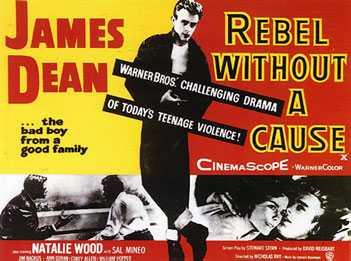
Rebel Without a Cause - A generational allegory? Maybe. This was to the 50's what The Graduate was to the 60's; a film about youth dealing with the ideals of their parents. Except here, what exactly is James Dean fighting against? It's unclear, but that's the point, it's as if he's rebelling against the stagnation of his parents, their apathy toward the world. And he wants to rebel against that, but for what? What does he want, he doesn't even know. It's so perfectly clear as a metaphor for American life in the 1950's, and even after. A generation living off of their parents' rewards and dreams, the suburban house and car and perfect life. It was perfect for the adults living out their lives, but what of the kids? How were they supposed to earn anything, or grow up with few challenges? Should they go back to the urban centers, now vacant, to find their own culture and meaning, and earn their dreams?
And so, with this sort of malaise that surrounded the post-War American lifestyle, the youth of the nation turned outwardly to find themselves lost in a world that their parents had carved out of their yearning for space and freedom, a world they didn't need to work in, or have meaningful responsibility. And that's when youth crime developed into what we have today: school shootings and teen pregnancies(that's not a crime, of course) and everything associated with after school delinquency. Crimes not coming from necessity, but from an actual desire to be bad. To rebel. It's interesting, in this film, there is this almost hidden pyschopathic nature. (In fact, the book the film draws from is called "Rebel Without A Cause: The Hypnoanalysis of a Criminal Psychopath." Plato is taken in at the beginning of the film for killing puppies, really creepy.
We try to re-imagine the 1950's as a perfect American world, but it wasn't. The crime rate was higher, racial tension was starting to brew and the youth of America were starting to create their own vision of America. Rebel tapped into that vein in America that was just getting its start.
Fantasia - Beautiful but sleepy. Nearly every time we watched one of the 10 minute segments from Youtube, we felt the need to slumber. In fact, a couple times before taking naps we put this on to quicken our trip to dreamland. Double in fact, I came to the conclusion that instead of setting our future toddlers in front of the tube to watch Hanna Montana, they are watching Fantasia, because it'll put them right to sleep. There's just the right mixture of beautiful images and delightful sounds. Hopefully the kids don't wake up during the Bald Mountain sequence, though.
The best sequence by far, though, is of course the Sorcerer's Apprentice. It's the least visually appealing, but it's the most rewarding. (And less likely to put you to sleep than dancing flowers and seasons changing.) I find the story still relevant today, even though the actual poem it's based on is hundreds of years old. On the simplest level, it's about a youngster yearning to be great, and tripping up along the way. But deeper, it portrays the human spirit of curiosity, pride and ultimate short-sidedness. Man is always pushing the envelope, and jumping the gun, even when we fail to think of the consequences. We get in over our heads sometimes, whether it's religously speaking, or in regards to technology, and hopefully a Master is there to save us.
With all its beauty, though, is it true art? As far as Disney goes, it's the closest they've ever gotten. But still you notice, they've still managed to Disney-fie nearly everything the movie touches, some reviewers saying it's kitsch. Fantasia was made in the heyday of kitsch, so it's kind of hard to avoid. But even if it is, this movie is a classic for no other reason than this showed that animation could be art.
Raiders of the Lost Ark - I went into this film with grand memories of the greatest adventure film of all time. I was prepared to write that it could be the best film of all time, because it was just that, just a film, with no pretensions to anything else. And it was landmark, it changed the film biz, reinventing the adventure genre, yadda yadda. But then I watched it. And I realized why I haven't seen this in a long time. It's just kind of alright. Granted, there are amazing sequences, like the opening where he runs from the giant ball, or when he shoots the sword guy, or when the Nazi's get melted by the wrath of God.
Lots of good stuff. But it's strung together by stupidity. Over and over again I kept thinking why? Why is he doing that? How could they plan that? Why, if they've been trekking in the wilderness for 3 days, is a plane waiting in the nearby river behind the place?
But then midway through I tried to reassess the issue, of focusing on the negative, and try and shut my brain off like normal people are supposed to do during an action flick. But wait, this is 2010. When the last Indiana Jones film came out, people didn't shut their brains off, and everyone realized how stupid Crystal Skull was. So in 1981 did anyone not do that? Maybe not, and now we hold this film up on a pedestal.
Lost Ark is fun, it changed things, Indiana Jones is a cool dude that I still want to be like after all these years. But we need to realize that it was the landmark summer movie that made audiences turn their brains off for a few hours, nothing more. Hollywood for the most part has matured. A little bit.
Rebel Without a Cause - A generational allegory? Maybe. This was to the 50's what The Graduate was to the 60's; a film about youth dealing with the ideals of their parents. Except here, what exactly is James Dean fighting against? It's unclear, but that's the point, it's as if he's rebelling against the stagnation of his parents, their apathy toward the world. And he wants to rebel against that, but for what? What does he want, he doesn't even know. It's so perfectly clear as a metaphor for American life in the 1950's, and even after. A generation living off of their parents' rewards and dreams, the suburban house and car and perfect life. It was perfect for the adults living out their lives, but what of the kids? How were they supposed to earn anything, or grow up with few challenges? Should they go back to the urban centers, now vacant, to find their own culture and meaning, and earn their dreams?
And so, with this sort of malaise that surrounded the post-War American lifestyle, the youth of the nation turned outwardly to find themselves lost in a world that their parents had carved out of their yearning for space and freedom, a world they didn't need to work in, or have meaningful responsibility. And that's when youth crime developed into what we have today: school shootings and teen pregnancies(that's not a crime, of course) and everything associated with after school delinquency. Crimes not coming from necessity, but from an actual desire to be bad. To rebel. It's interesting, in this film, there is this almost hidden pyschopathic nature. (In fact, the book the film draws from is called "Rebel Without A Cause: The Hypnoanalysis of a Criminal Psychopath." Plato is taken in at the beginning of the film for killing puppies, really creepy.
We try to re-imagine the 1950's as a perfect American world, but it wasn't. The crime rate was higher, racial tension was starting to brew and the youth of America were starting to create their own vision of America. Rebel tapped into that vein in America that was just getting its start.
Fantasia - Beautiful but sleepy. Nearly every time we watched one of the 10 minute segments from Youtube, we felt the need to slumber. In fact, a couple times before taking naps we put this on to quicken our trip to dreamland. Double in fact, I came to the conclusion that instead of setting our future toddlers in front of the tube to watch Hanna Montana, they are watching Fantasia, because it'll put them right to sleep. There's just the right mixture of beautiful images and delightful sounds. Hopefully the kids don't wake up during the Bald Mountain sequence, though.
The best sequence by far, though, is of course the Sorcerer's Apprentice. It's the least visually appealing, but it's the most rewarding. (And less likely to put you to sleep than dancing flowers and seasons changing.) I find the story still relevant today, even though the actual poem it's based on is hundreds of years old. On the simplest level, it's about a youngster yearning to be great, and tripping up along the way. But deeper, it portrays the human spirit of curiosity, pride and ultimate short-sidedness. Man is always pushing the envelope, and jumping the gun, even when we fail to think of the consequences. We get in over our heads sometimes, whether it's religously speaking, or in regards to technology, and hopefully a Master is there to save us.
With all its beauty, though, is it true art? As far as Disney goes, it's the closest they've ever gotten. But still you notice, they've still managed to Disney-fie nearly everything the movie touches, some reviewers saying it's kitsch. Fantasia was made in the heyday of kitsch, so it's kind of hard to avoid. But even if it is, this movie is a classic for no other reason than this showed that animation could be art.
Tuesday, July 6, 2010
Saved vs. Juno: Battle for Pregnancy Supremacy
I try not to review films from the queue that I've already seen, but apparently I give too many negative reviews. So I decided to review Saved, a film I love.
Juno got buzz like no pregnancy film has in a long, long time. And now, young girls getting knocked up has become a slight trend in film and TV, with Secret Life of An American Teenager, The Pregnancy Pact, 16 and Pregnant, Teen Mom, Knocked Up. And then even Away We Go, even though they aren't too young, still it, like The Office and Waitress deal with young adults coping with a first time pregnancy. It's also a case of either life imitating art or the other way around; with the high school girl pregnancy pact that happened a few years ago, and teen celebrity Jamie Lynn Spears going the family way.But Juno was the height of the pop culture pregnancy boom. It was a critical and commercial success, earning Oscar noms and a screenplay win, which is quite a surprise, considering the story has been told before, and actually the premise is quite simple. But just like some of 2009's Best Picture noms, like Precious, The Blind Side, or even An Education, it very easily could have been an after school special or straight to video. But even more realistically, it seemed destined to just be an indie darling that people love, but gets avoided come awards season. That's exactly what happened to Saved!.
Saved and Juno follow very similar premises; a high school girl gets pregnant and has to deal with the social realities of the "problem." Except the differences lie in what those social realities actually are. Juno very well could be the secular Saved. In Saved, Mary is a good, Christian girl trying to do what's right and follow her faith. Her boyfriend reveals that he might be gay, and she has a misguided vision of Jesus telling her to help him. The only way she can figure to help is by keeping him on the right side, and they have sex. (But still trying to have some decency, she keeps her bra on during it.) Her boyfriend gets sent to Mercy House, a Christian insitution designed to "heal" teens of what ails them, and Mary gets pregnant. The film follows Mary through the school year, dealing with her faith while hiding her pregnancy from her peers, including A-type personality Christian girl, Hillary Faye.
In Juno, Juno gets knocked up by her pseudo-boyfriend Bleeker, played by short shorts wearing Michael Cera. Here, she comes out quick, telling her parents and not hiding anything. She decides to give the baby to a barren couple wanting a child. Even though the plot of Juno revolves around the pregnant teen, it's as if the film is about something else, though. It's just about a teenage girl with average problems, struggling to build and maintain relationships. As though, the pregnancy wasn't that unique, she's just an average American teenager with a typical problem. And like all the TV shows that came out afterward show, it doesn't seem like it's that unique of a problem. And since it isn't that unique of a problem, the film should just be an example of art imitating life. And honestly, that's where it ends. Juno isn't that deep of a film. It's good. The characters are well written, the story is interesting, there's a lot to relate to. But by the end, how much is the film asking?
And that's why Saved is a better film. It's a satire, and feels slightly on the nose at times, with the Modern-Day Christian sayings that the kids say, and the situations you could see a mile away. But beneath that, there is great comedy that asks real questions, and not just for the Christian community. At times, it felt like the film was making fun of the new American Christian movement, but mostly you get the feeling that they're laughing at themselves, and seeing their own pitfalls. And by extension, this film is really about American society, and our coping with our collective faith and living in the real world.
It's rightly set among teens growing up with the faith of their fathers, and their fathers' trying to interpret the world for them. It's the character of Patrick, the Christian Dean's son, that we can most admire, because he's the one that is internally asking the questions and facing the world himself without any outside dilemma, like Mary. Whether you're religious or not, Saved is a great cultural film that actually takes a peak inside what's going on with America today. And even though it revolves around the same topic that all these other films, Saved actually asks real questions, even if it doesn't give all the answers.
Juno got buzz like no pregnancy film has in a long, long time. And now, young girls getting knocked up has become a slight trend in film and TV, with Secret Life of An American Teenager, The Pregnancy Pact, 16 and Pregnant, Teen Mom, Knocked Up. And then even Away We Go, even though they aren't too young, still it, like The Office and Waitress deal with young adults coping with a first time pregnancy. It's also a case of either life imitating art or the other way around; with the high school girl pregnancy pact that happened a few years ago, and teen celebrity Jamie Lynn Spears going the family way.Saved and Juno follow very similar premises; a high school girl gets pregnant and has to deal with the social realities of the "problem." Except the differences lie in what those social realities actually are. Juno very well could be the secular Saved. In Saved, Mary is a good, Christian girl trying to do what's right and follow her faith. Her boyfriend reveals that he might be gay, and she has a misguided vision of Jesus telling her to help him. The only way she can figure to help is by keeping him on the right side, and they have sex. (But still trying to have some decency, she keeps her bra on during it.) Her boyfriend gets sent to Mercy House, a Christian insitution designed to "heal" teens of what ails them, and Mary gets pregnant. The film follows Mary through the school year, dealing with her faith while hiding her pregnancy from her peers, including A-type personality Christian girl, Hillary Faye.
In Juno, Juno gets knocked up by her pseudo-boyfriend Bleeker, played by short shorts wearing Michael Cera. Here, she comes out quick, telling her parents and not hiding anything. She decides to give the baby to a barren couple wanting a child. Even though the plot of Juno revolves around the pregnant teen, it's as if the film is about something else, though. It's just about a teenage girl with average problems, struggling to build and maintain relationships. As though, the pregnancy wasn't that unique, she's just an average American teenager with a typical problem. And like all the TV shows that came out afterward show, it doesn't seem like it's that unique of a problem. And since it isn't that unique of a problem, the film should just be an example of art imitating life. And honestly, that's where it ends. Juno isn't that deep of a film. It's good. The characters are well written, the story is interesting, there's a lot to relate to. But by the end, how much is the film asking?
And that's why Saved is a better film. It's a satire, and feels slightly on the nose at times, with the Modern-Day Christian sayings that the kids say, and the situations you could see a mile away. But beneath that, there is great comedy that asks real questions, and not just for the Christian community. At times, it felt like the film was making fun of the new American Christian movement, but mostly you get the feeling that they're laughing at themselves, and seeing their own pitfalls. And by extension, this film is really about American society, and our coping with our collective faith and living in the real world.
It's rightly set among teens growing up with the faith of their fathers, and their fathers' trying to interpret the world for them. It's the character of Patrick, the Christian Dean's son, that we can most admire, because he's the one that is internally asking the questions and facing the world himself without any outside dilemma, like Mary. Whether you're religious or not, Saved is a great cultural film that actually takes a peak inside what's going on with America today. And even though it revolves around the same topic that all these other films, Saved actually asks real questions, even if it doesn't give all the answers.
Labels:
cinema,
film,
film review,
indie movie,
Juno,
movie review,
pregnancy,
pregnant,
Saved
Subscribe to:
Posts (Atom)