Tuesday, March 30, 2010
Alien Nation vs District 9
I hadn't ever seen Alien Nation before. I only remember the TV show that came out the next year and watched with my brother. It was a fun show, but only lasted a year. It's been largely forgotten(except by the ScyFy channel, who plans on remaking it soon), and received not so charming reviews. District 9, on the other hand, has gotten stellar reviews, I think mainly because everyone was so surprised it was so good. I saw it at the dollar theatre after hearing all those reviews, and still I was surprised by how good it was.
Alien Nation came out in 1988. Science fiction had been established for decades, but if you look at every science fiction before it came out rarely had the genre been established in a setting of reality. Good science fiction films commonly take place in; 1. the future(usually dystopian), 2. in far away space, or 3. in modern times but with a wild scientific change that alters the world. A key exception to this is the original "The Day the Earth Stood Still." It follows a landing one alien, in a realistic modern setting, and there is no major change that alters society. Another note, it deals with social issues on par with Alien Nation and District 9. It's also one of the earliest science fiction films to be recognized in some way by the Oscars.
So Alien Nation made a change. It was realistic and it was set in our world. (The closest that Hollywood got to that was Arnold Schwarzenegger pretending to be a cyborg from the future.)
In AN, Los Angeles was just like it was before the aliens landed. It also realistically set the plot in motion; the aliens were quarantined then released into society. (I think that's probably what would eventually happen if humanoid alien refugees landed.) This alone is tremendous.
What's also interesting is the fact that the filmmakers used a documentary style shoot. It isn't noticeable, but that's why it's actually so well done. It's so believable.
However, the reason the movie didn't, and maybe still doesn't, come off as tremendous is because the movie basically follows to the letter the buddy cop genre. That's where the innovation of the film stops and the filmmakers stopped making a unique film. It follows so closely all the cliches of a buddy cop that you know exactly what's going to happen before it happens. In fact, there are so many visual clues(zooming in on the bad guy, differently toned music, etc.) you know the entire plot. That's the problem with Alien Nation, it isn't smart in any way. They could have really made a smart movie even within the realm of a buddy cop. This was, after all, the era of Lethal Weapon and 48 Hours.
However, with all its flaws the film makes a big leap. Cultural history has a progressive nature and Alien Nation is just one stop on the road to District 9. Alien Nation is like so many touchstone films that don't get recognized for being influential. The wave of cinema keeps on moving and when the box office and reviews don't shine them they are overlooked by history. But Alien Nation predates reality TV and the overuse of documentary film style. (Thanks so much Paul Greengrass!) District 9 was almost too late in coming because of this. All of the elements in District 9 had basically been done before. It's part mockumentary, part alien landing, part apartheid allegory, part human man turning into monster. But somehow when the parts are put together it works seamlessly and like something you've never seen before.
Looking back on District 9 there isn't anything I can pinpoint that I liked so much. The lead guy was slightly annoying and a major dufus. (That's really why I didn't like Children of Men, I hated following that guy around. Also, that's another touchstone film in the science fiction genre, despite my not liking it, I accept the fact that it's unique and has some really interesting parts.)
Then, the plot in D9 took forever to get going. It meandered around for the first half of the film and you weren't sure where it was going. I didn't realize the mousey nerd was the lead until half way through the film.
But yet somehow you're compelled. And I think you're compelled because they created such an interesting scenario. To me, that's the essence of what makes science fiction great; the scenarios. It isn't fancy technology or crazy aliens. It's what happens when you juxtapose those elements with something totally different.
Since Alien Nation and District 9 basically start with the same scenario, I think what puts D9 above AN is how unique the story actually was. (Though I think Avatar has shown that unique story doesn't qualify a movie for box office success.) But I think people did see how unique D9 was and how compelling the situation was. There was nothing compelling in Alien Nation. It was just two cops doing their job. It's no more compelling than Law & Order, which isn't bad, but again just not unique.
I'm glad to see that science fiction has followed the path toward making smarter movies. The writing and story are so much smarter than even movies that are getting so much praise, like Blind Side or Precious. Those are simple character dramas. But what science fiction has to do is build not only characters(sometimes literally build them from CGI), but worlds and technology, as well as create the action. Finally, the genre is getting credit where credit is due. Alien Nation wasn't even nominated for make-up 1988, but this year more than enough sci-fi movies were nominated for various awards.
Thank you, Alien Nation, for kind of paving the way.
Here's my list of Top 10 Over-Looked or Underrated Science Fiction Films
10. The Running Man (Arnold at his B movie best)
9. Bride of Frankenstein (just about the best sequel of all time)
8. Soylent Green (Heston at his B movie best)
7. Artificial Intelligence (watch it again and see, if you disapprove)
6. Enemy Mine (great example of Sci-Fi using allegory)
5. The Fifth Element (super fun, and super cool to look at)
4. Star Wars III: Revenge of the Sith (the best of the prequels)
3. Iron Giant (could also be on the list of overlooked animation)
2. Moon (most overlooked film of 2009)
1. Brazil (the best dystopian film, bureaucracy is the dystopia!)
Saturday, March 27, 2010
Solaris
One of the classic films I have gotten around to was what I heard in college described by one of my professors as "the Russian answer to 2001: A Space Odyssey." The original Solaris is about 3 hours long, so it took a few days to get through. And since I hadn't seen the remake, I had to watch it and compare. Was it worth the six hours of viewing?
Solaris!!!
First and foremost, again the original runs close to 3 hours and the American remake clocks in at about an hour and a half. So my first comment has to be that, leave it to American filmmakers to make the same story but in half the time. Bravo! Because the remake could have easily been over three hours, it felt like it at times. And actually there-in lies the problem. Since the original is foreign, both in language and culture there is a uniqueness to it. It feels so different, and therefore it has a curiosity to it that no American film can have. I was so curious what the Russians thought about the future, and how they felt about love and how their actors acted, and even in general what the future looked like to people in 1972. Apparently it looks like Tokyo(where they filmed the futuristic city). But with the American version, that's absent, so all you're left with is the story. And when you take a slow and rather bland story and add no spice to it whatsoever, you get a very bland film that you aren't interested in.
Another curious thing about the original, was that it was void of any political thought. There was never a mention of communism or overall purpose in why they were there studying the planet Solaris. The two other scientists didn't come off as Soviet robot types. Each character had personality and quirks. In the remake, about the only person with a personality was the guy who plays Daniel Farraday from Lost. And no surprise, he kind of plays the same character; a quirky out-in-left-field scientist.
Science fiction has come a long way from 1972 to 2002, when the remake was made. Star Wars, Blade Runner, Alien, The Matrix. Each of those films, and countless others, have brought so much to make the genre legitimate, bringing deep questions about humanity and technology. Solaris, the original, brought up some interesting questions. And those same questions are brought up in the remake, exactly the same way, while trimming things as well. So it begs the question, why remake a film if you aren't going to bring anything new to the story? I'm not opposed to remakes. All across America stage plays are remade every year, with new actors and directors and sometimes new takes on locations or culture. So it seems entirely logical for the same thing to happen in film. A new culture takes on an old idea and changes it to say something new or shed new light. With that in mind, it is no wonder that the new Solaris is a forgotten film. No one went to see it, and yes Mr. Soderbergh that partially did have to do with marketing problems, but mainly because this movie had nothing new to say, and in light of the original and the book, the themes of the remake don't make sense. So I'll leave the remake at that. If the original was never made I would praise the 2002 film, but the original was made.
The original is like a masterpiece. I won't say it is a masterpiece, but it is like a masterpiece. It felt entirely like the Russians did in fact say, "Okay, Americans made 2001, we can make a science fiction movie that means something, too." And they did. (Though Wikipedia says the director hadn't even seen 2001.) So much science fiction proposes the question of mankind making contact with aliens and what would happen, and our place in this universe. Solaris is so interesting because, and the book is more about this than a love story, that man is not capable of understanding the universe or any alien being. One of the scientists says, "We don't want to conquer space at all. We want to expand Earth endlessly. We don't want other worlds; we want a mirror. We seek contact and will never achieve it. We are in the foolish position of a man striving for a goal he fears and doesn't want. Man needs man!" Isn't this even a problem here on Earth? People are selfish. Mankind is selfish. Most drama has to deal with human selfishness, and through the whole film Kelvin is faced with this dilemma, and it's so hard. The dilemma is that his dead wife is on the station. He knows she isn't real. And part of the reason the dilemma is so hard is because he doesn't know why she is there? The planet Solaris is somehow making these human-like forms appear on the space station, coming from the scientists memories, but why? And yet, he wants her around (though at first he sends her into space) even though he knows she isn't real. But what person wouldn't want their dead love around them again?
The film is pretty ambiguous about the whole thing, though. What is he to do? He sent her away once and she came again, and the planet is there trying to do or say something. And that is ultimately where the film falls short. There really isn't any action, just a lot of esoteric dialogue and philosophy and staring at each other. At least 2001 had some action. He doesn't know what the planet is trying to say and thus we don't ever know, and that's the meaning; we really can't know about the universe. Depressing. Just like the Soviet Union.
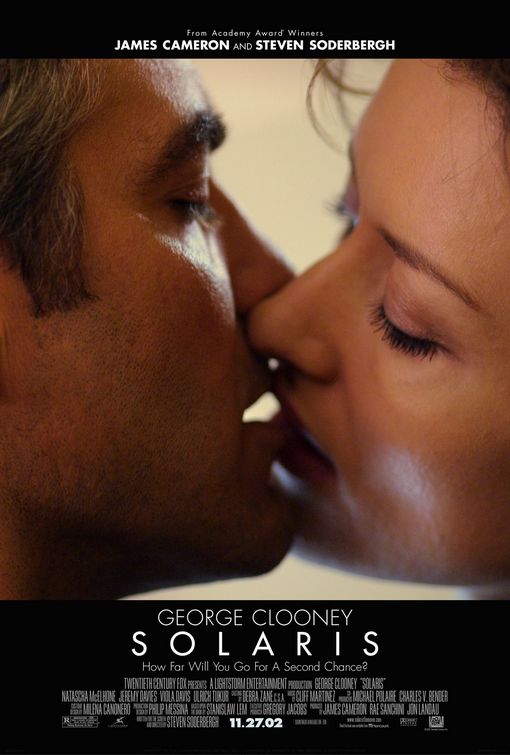
I've included some movie posters from each film. My favorite from each is the two above, but these will offer some comparisons to the two films. It's clear in the posters.


Friday, March 19, 2010
The Hurt Locker
Hello. Welcome to my first blog. I decided that since I was doing so many movie reviews I didn't want to clog up the Nitsy blog with all of them. Blogs are like free pancakes these days so why not start a new one. I've got opinions and I watch a lot of movies, a perfect combination, like Nick and Betsy. Or cheese and salami. Since it's my first blog post, I thought I'd start with the most recent Best Picture winner, and one that I firmly stand behind, The Hurt Locker!
Good films are literature. Great films are art. Since films are essentially "motion pictures," movement and action is essential. Story at it's core is action. Because of this the movies that can transcend their medium(film) are those that are centered around action or movement. Ironically, these same films are overlooked for that reason, action(war, gangster, adventure) and movement(sports, thriller) are seen as low-brow. Of course, these two aspects of story are so abused and overused that they're usually made cheaply. By cheap, I mean made from cheap materials, which are sacrificed to make a wider appeal. But at their best, war films are metaphors for the war they represent. Apocalypse Now, Platoon, Full Metal Jacket, Hamburger Hill, The Deer Hunter, all represented the Vietnam War. Until now, there hadn't been a war film made about the Iraq War. The Hurt Locker has emerged as just that movie. Like the best metaphors it operates on multiple levels, and because of this some of its meaning is lost on those of the audience that remain thoughtless(Those not looking to find meaning, but enjoying the film purely for entertainment purposes. No ill intent intended.).
The Hurt Locker follows a small Ordnance Disposal unit. On the film's basic level the action by itself is enough to be compelling. If nothing else, the film was a tense telling of the soldiers' life and work in Baghdad during the height of the 2004 insurgency. From the very beginning when they are disarming the first bomb, you sit tensely by waiting, not knowing what's going to happen. Then, who you think is going to be the star of the film(Guy Pearce) dies! (a la Janet Leigh in Psycho.) And later in the film another star actor is killed. If these guys are dieing then anyone can be killed. It's these sorts of moments, and throughout when they're disarming bombs, which no two look alike, that keep you enthralled. I was more tense while watching this than watching any recent horror or thriller.
But the film works deeper even than this, becoming the metaphor for Iraq. And to get to the deeper levels one has to think of the time in which the movie takes place. This was 2004 in Baghdad. The US soldiers didn't know what they were up against. Baghdad was a war zone, and one the military hadn't encountered before. Who or where was the enemy? It was all around and yet faceless. Soldiers were dieing from roadside bombs and RPG from not only unknown people, but unknown motives. The Hurt Locker crystallizes this atmosphere. The easiest part for the three men is when they have the bomb in clear view, but even then there may be hidden parts. And even after that, there is no trip device or timer, the bomb is detonated by a cell phone from some enemy hiding around the corner or in a building. How can these men fight this enemy? They can't. All they can do is put out the fires that rages. Even when they find the enemy's hidden bomb making base, it's stripped of all humanity. Again, the questions is asked, how can these men fight this enemy? Not only is it faceless, but apparently without conscience or remorse.
There was nothing cartoony or even glamorous about the war through The Hurt Locker's eyes. The three soldiers each represent a different soldier and outlook on the fighting. Eldridge, the youngest, is the emotional nerve of the group. War has affected him deeply and he'll never be the same. He blames himself for his former leader's death and carries that with him. Before the war, he was probably the most excited about going and maybe the most patriotic of the three. Through Eldridge we see that war can and does affect people. He is now the reluctant fighter, and perhaps represents that part of America that is helpless to making change, yet is emotional about it.
Then there is Sanborn, the "by the book soldier" who buries his pain and emotion. He fights, but only because he feels he has to. And since he has to fight, he's going to do it by the book. Except, what he's slow to learn, is that this is a different war. There was no book for what they were doing. He'll go back home and pretend he wasn't affected by the fighting, but deep down he is. He represents that part of America that feels that they have to fight. Actual combat has made him jaded, and now he believes otherwise, but he signed up for a reason, and in any other war where the sides and reasoning were not blurred he'd be just as willing to stay in the action to do what was right.
Finally there is Sergeant James, the leader of the group. Much of the metaphor of the film is centered around him. In fact, the opening quote could very well describe him, "The rush of battle is a potent and often lethal addiction, for war is a drug." As we learn at the end, war is the only thing he loves. Usually when someone loves something, they're very good at it. This holds true for James. He is extremely skilled at disarming bombs. So good that he takes risks and rarely relies on his teammates. He sticks his neck out, just to see what challenges lie above. His teammates see him as reckless, and indeed in all eyes but his own he is.
It's in that recklessness that lies the deepest metaphor from The Hurt Locker. The most telling part comes at the end of the film, as James walks down the street on another tour of duty and the movie fades. He's back doing what he loves; fighting. He's learned nothing, except how to better fight. He's not only stayed stagnant as a character, he's grown colder. In example, when the boy comes up to him at the end, he'll have nothing to do with him from then on. James should be at home at home, but he isn't. Where is he at home the most? On the battlefield. This is America. We've learned nothing, except how to fight the insurgency better. We haven't learned more about diplomacy or how to handle the Iraqi people(and by extension the rest of the Middle East). If our history has shown anything, we as a people feel comfortable fighting wars. Maybe it comes from our democratic idealism, maybe it's the prosperity that has grown into pride. It doesn't matter, we have brought war to other nations and nothing is better off. Our families aren’t closer. Our economy is no better. And we as people are no better off. What other films have done so clumsily, this film hides that metaphor in the action and emotion, not wide open in the dialogue. That's why films centered around action hold the best metaphors. A film built around characters and their emotions can be nothing greater than literature.
The Hurt Locker was a deep film. It took the aesthetic of what film is supposed to be used for and it turned it into what art is, a metaphor. The characters are metaphors, of American psyche, the action was a metaphor of the Iraq War, and the theme of the film was a metaphor for the present American condition. There is a reason it won Best Picture. This film didn't rely on one aspect of film, be it the acting or cinematography or editing. It relied on all of them, from the script all the way to the editing. It wasn't a cartoonish rendition of war which on the nose metaphors. It was a thriller and one of the best ones ever made.
Further examples that the best metaphors come from action based on AFI's Top 100:
The Godfather, a gangster film
Gone with the Wind - centers around the Civil War
Lawrence of Arabia - a war film
The Wizard of Oz - a journey
On the Waterfront - gangster film
Schindler's List - centered during WWII
Star Wars - a sci-fi war film
Casablanca - takes place during WWII
The Bridge on the River Kwai - WWII
Raging Bull - sports movie
Psycho - a thriller
Chinatown - a detective thriller
As well, looking closer at Citizen Kane, the film is filled with strong action, build up with emotion, i.e. when he destroys the bedroom.