Friday, April 30, 2010

A Whole New World: Tron, Avatar and Dances With Wolves

For what seems like forever now, but has only been a few months since it was released, critics and reviewers have been comparing Avatar with Dances with Wolves, and I was going to follow that trend since I recently watched Dances with Wolves as part of our watching of AFI's Top 100 films. But after watching Tron I found some similarities and perhaps false hopes that I can relate between the two.
Tron seemed like it would be a revolution in cinema. In fact, many Disney animators feared the film would put them out of job when computer animation took over. Now almost thirty years later the film industry is in what seems like a similar state, brand new CGI technology that's threatening to change everything, and on top of that a new 3D craze that some people are saying will change the way we see movies. But what's going to change? The slow tick forward of CGI since Tron hasn't put anyone out of business, (Disney brought back it's hand drawn animation department.), not every film is made with CGI, for the majority of the film industry CGI is still a tool like anything else. And that's what people aren't understanding. 3D won't change anything, except films made for that format. There may be more 3D films, and now those films will be made better, but it isn't going to change every other film. Avatar is changing things, but only in the way that The Matrix or Jurassic Park did; by pushing the technology forward.
Tron and Avatar share something else similar; the basic story structure of films past. In the case of Avatar it's Dances with Wolves or Pocahontas. In Tron, it follows the "lost in a different world" stories of Wizard of Oz and Chronicles of Narnia. (The books had been around for decades.) In Tron, Flynn is sent into the computer world by the Master Control Program, which runs the whole world like a dictator. Flynn meets characters that resemble people in the real world, just like in Oz. He has to master the world, unlocking things, winning battles and ultimately defeating Master Control. In the end, he changes the whole world, freeing it from the oppression of MC, much like Dorothy defeats the Witch or in Narnia they defeat the...witch...and everything is the better for it. I don't fault the film for it's simple story. The tale of a hero going into the underworld is as old as time. It's found in every religion and mythology.
Just like Avatar, the filmmakers made a whole new world, completely animated, plopping in real live actors. In Tron their faces stand out so much, because all around them the world is like a computer. In Avatar, the actors stand out because all around them is the most beautiful world that bears no resemblance to reality. Some people have said that it all blended together so smoothly that you couldn't tell what was real and what wasn't. These people are liars. They know the difference, you know why? Pandora doesn't exist. It ALL looked fake. It was like staring at a video game for 3 hours. Have you ever played a video game and thought, "Wow, that looks pretty real." I have. But I know it isn't real. Even the most realistic games still don't look "real." Looking at something like the last Legend of Zelda game, it kind of looks real, but only when you're just looking at that and nothing else. The 3D glasses serve a second purpose besides tricking your eyes into seeing the screen in 3 dimensions; they block your view from everything else in the theater. They act like blinders, so all you see is the screen, and with no point of reference to anything else it looks real because that's all your eyes are seeing for 3 hours.
I chose this Avatar poster in particular because it has Jake Sulley across from the Navi girl. Look closer at it. At first it all looked real, right? Now compare it to the rest of the page, or even look away, then look back. It's fake, totally fake. Look even closer....even Jake Sulley's face is fake. It's all fake, and it shows more than people are willing to admit. I will say this, Avatar looked good. The painting is tremendous. But when you make a totally fake world, it still looks made up. (Compare Tatooine in the original Star Wars to some of the new worlds in the Prequels.) As I was sitting in the theater, it felt like I was watching someone's video game. And just like when you're watching someone else play a video game, it got boring. Who wants to see someone else jumping through trees and flying on...flying things...for 2 hours straight. There's only so many trees or flying things that you can see and still keep my interest.
Obviously they've come a long way since Tron,  where their world amounts to box shapes and circles with shading on one side, but Avatar's graphics aren't the be all end all yet.
And neither is the story. I related many times while watching and since where Avatar copied some story element or visual element from past movies, including some of Cameron's. One that I haven't heard mentioned is when Jake and the Navi kill a Pandoran dear, and they thank it. It's an almost shot and dialogue rip off of Last of the Mohicans, where Natty and his Indian brothers kill a deer and thank it for providing them with sustenance. But of course, since the Navi are basically Indians, there will be some crossover between them and Native Americans. Except in Avatar there is absolutely no realism or depth to them or their culture. It's like a 14 year old came up with them. A 14 year old who fantasizes about tall cat women. There is no real culture to these people, except in their tails, which literally....literally connect to the world. Literally they are connected to the world. (Literally.) They fly and dance, but yet never does it seem like they live in a "real" world. The Native Americans lived in a pristine, beautiful and balanced world before the Europeans arrived, but it was by no means perfect. They still had to fight to survive; winters were cold, disease was always present, and other tribes were always encroaching on their resources.
Which leads into the next portion, comparing Avatar with Dances with Wolves, (which as much as I love to do, it still annoys me to do it.). In finishing the last point, DwW shows a well-rounded portrayal of a well rounded people. They hunt, they fight, they kill. They live in a real world. They have real reason to fear John Dunbar and other whites, but yet they're strong and fearless. They also love and care. It shows, when they come across the herd of buffalo that were skinned. You can feel for them, and the horrors that this new world of people will bring. Most of the similarities between Avatar and Wolves is in the details, some being eerily similar. John Dunbar. Jake Sulley. They sound similar, and at points in each movie their names are almost like a plot point, or at least the movie pauses for a moment when they're said.
Everything else similar is attempted by Avatar but accomplished in Dances with Wolves. All the way from the depth of the main character, and the other characters, to the complexities of the world. The one part I really actually liked in Avatar is when they send for other tribes, and for once you get a broader picture of the workings of this world, and not just the fantasy of the one tribe.
Breaking down Avatar piece by piece and comparing it to Dances with Wolves would be a futile effort, they're different films, and not even in the same realm. Avatar is cotton candy, while Dances with Wolves is art. Except, Avatar doesn't sit back and act like cotton candy. It thinks it's an art film that has meaning. But like hotel art, it's meaning is so apparent it's like clear water, you can see right through it because it's how they say...on the nose.
A few quotes from Avatar....
"This is why we're here: because this little gray rock sells for twenty million a kilo" (This lost it for me, I was out at this point.)
"Everything is backwards now, like out there is the true world, and in here is the dream" (This is as bad as the narration in Platoon.)
And that's what gets me about this film, it treats the audience like their stupid. Like they can't understand what you're doing or trying to get across. Sometimes art needs explanation, but there was never real art that spelled out what exactly it was. Spelling out "Forest" isn't art. Painting a forest is. So that's where Avatar is left. It's cotton candy, and the medicine that James Cameroon thinks he's sneaking into it to get us to think about the environment or the war in Iraq...we got it. Loud and clear...you aren't an artist, you're a candy maker.

Thursday, April 29, 2010

AFI Top 100: The Godfathers of the Police Drama and the Western

 Usually I review 10 at a time for our viewing of AFI's Top 100, but I felt these two films stand alone as such unique and remarkable films that they deserve separate recognition. I enjoyed each thoroughly (Betsy still would have rather watched The Little Mermaid, as usual.) and loved reviewing them.

The French Connection - This is such a landmark movie that is almost forgotten by non film fans. But most films made before 1990 are rather forgotten. But this film is like the Citizen Kane of cop movies. It's so influential and yet so great as a movie by itself. It took the movie Bullit and turned it into a real-looking movie. It's not glossy in any way. Bullit has a beautiful car chase scene on the streets of San Francisco between two awesome cars, while French Connection has an ugly car chasing a El train through burned out Brooklyn. Bullit has the handsome Steve McQueen, who is like the least rebellious rebel cop. In French Connection, you have Gene Hackman, looking like he's been up all night and never combed his hair.
The other great thing about this is all the cliche starters; the "you're off the case" scene with the boss, the attempted killing of a cop(which pulls the cop back on the case), the good cop-bad cop routine, etc. It was fun to see all that, and think to future films that used those tropes.
This film isn't beautiful, it's a little convoluted (you'll need to pay attention to follow the actual plot), and the ending isn't so fulfilling, but still good. The famous chase scene is touted as the best scene, but my favorite scene is when Doyle is following Frog 1 in the subway. There is such a great tension to it, you're so nervous but yet no guns are drawn, there's no fast moving cars, it's just two guys trying to outsmart each other. Anyone interested in cop films or action films in general, need to see this to see where all the cop cliches come from.

Shane - "Shane!!! Shane!!! Shane!!!" I almost cried when the kid was yelling this in the end. Both times I watched the ending. In fact, I watched the ending 3 times. And just like the boy, who didn't want Shane to leave, neither did I. The boy is the collective audience, many of whom I'm sure were boys in the theater when this first showed. In fact, the boy is the eyes and ears through the whole movie. We see what he sees, we feel what he feels and from his inquisitive nature we sense who Shane really is.
Shane is a completely classic western, yet in never falls into the traps that crumble other westerns and like the best westerns it's a metaphor for both it's time and America as a whole. (For more on that metaphor, see my future review of High Noon, released a year earlier than Shane.) In fact, Shane is the same but so different than other westerns in every way. The mysterious gunslinger, the man in black, the helpless farmers. The film comes so close to B movie cliche but stays it's course. Even further, the film even strays from cliche in it's set design and setting. Nowhere do we see the famous Monument Valley backdrop or wild dessert. The film takes place in Wyoming and sticks to that setting accurately, with beautiful mountains that stain the horizon and the humble valley where the homesteaders live. And then the homesteader's farms, there's nothing beautiful or remarkable about their homes. There's no awe-inspiring vistas or prairies, it's just a basic place. Then the town itself is simple. You can tell it isn't a set. The buildings are almost ramshackle and humble, the street is muddy and kind of an obstacle. Inside the saloon and general store, it's cramped and tight and not typical of a Hollywood set. There's no wide balcony or spacious bar, the area under the stairs is almost lost. All of this helps create a real world, where things aren't always perfect. Even the final gunfight is awkward and less than a spectacle. Shane stands in front of the bar, and in the corner is Wilson. They stand diagonal from the walls and bar, as if the stand off came about organically, rather than staged. And that's what the whole film is like.
So then what about the deeper meanings of the film. The best way to figure that out is to look at the time in which the film was made. 1952, but wasn't released until 1953 due to going overbudget and extensive edits. Though this film isn't considered as one of the bigger anti-McCarthy metaphor films like High Noon or the stageplay The Crucible, it fits the mold. The homesteaders in the film are completely in their rights, they own their property, but yet have no power. All the power lies in Rieker, the large cattle rancher who wants them off so he can use the whole valley for his herd. He goes so far as to trample their fields, kill some of their livestock and then hire outside men who end up killing one of the homesteaders. This is quite a clear metaphor for the unfair practices of Joseph McCarthy and his communist witch hunts. In steps Shane, the mysterious stranger who wanders into the community, representing the freedom of America. Nothing is tying him down, and he holds no fear for Rieker or his men. Unlike the Sheriff in High Noon, Shane holds no real authority, he's pretty much an average guy. Except, he's the complete mythic American hero. He has no past, and his future is uncertain, similar to many Americans as well as America as a whole. America needed to stand up to bullies like McCarthy, men who were taking away basic freedoms. Shane proved to be the perfect hero figure, showing that it could be done. There's a reason why the Western dominated American cinema for so long, America loves heroes, especially ones that embody the American myth. And there's no better portrayal than Shane.

Wednesday, April 28, 2010

Queue Catch All #3 - Bones, Sketches and the CIA

The Lovely Bones - We watched this with our good friends/close relatives Karl and Allie. (Celebrity name Kallie) Watching a movie with people vastly changes the mood and intended comedy of a film. When someone else doesn't buy into something on screen or thinks it's funny you're suddenly thrust into thinking that, whether you like it or not. This is usually okay when watching a comedy, as a group usually does. But watching a semi-serious drama is a different story. The Karl half of Kallie is a joker and didn't take much of the movie very serious, which brought the whole mood of the room down (or up). We all began questioning the movie; it's characters' motivations, the fantasy afterlife, the funny 14 year old girl dialogue. But the one thing we didn't make fun of was Stanley Tucci's performance of the killer. He was freaky and chilling. The Allie half of Kallie, who works as a counselor for troubled teens, kept commenting on the accuracies of the character and how it related to real life killers. From seeing just the trailers, I could tell that Tucci deserved an Oscar nomination, and his performance in the whole movie didn't disappoint. He's haunting and thorough as the neighbor killer. You can see his method from the hair, mustache and glasses, to the way he talked, walked and laughed. Tucci was this killer to the core.
The film as a whole made some interesting story choices, and because of that I think it received poor reviews. It just doesn't follow standard movie plotline. The protagonist is dead and only occasionally acts to move the plot forward. She's barely even reactive. No one in the real world ever fully steps forward to take the place as the driving force in the movie, sometimes it's the father, sometimes the sister. At the end, the girl does nothing to stop Tucci from getting away. There are so many little things that alter the course of the film away from a standard story that a wide audience can accept, but that's what I admire about the film. It took a lot of chances. I'm curious to know how faithful it is to the book, because that may be why it made the choices it did. It's worth a view, there was enough there to make it enjoyable and enough in Stanley Tucci's performance to draw you in.

 Year One and Monty Python's The Meaning of Life - I've been meaning to do a review of Year One, but it's so awful that I hate even talking about it. So after seeing The Meaning of Life, I figured I could pair them together and talk about a good sketch movie next to a very poor sketch movie. Year One doesn't think that it's a sketch movie, it has a singular plot and protagonists, while The Meaning of Life actually is a movie made up entirely of sketches each relating to the meaning of life. Even though Year One has a plot and protagonists, it's nothing but a series of sketches relating to cavemen, biblical stories and ancient civilizations. Each scene or section is like a gag relating to that story or time period. They meet Cain and Abel and it's all a laugh when Cain kills Abel and the ways he denies it. Then later they meet Abraham and accidentally stops him from sacrificing his son and then it's a laugh when he wants to circumcise Black and Cera. And this is actually the good part of the film, once it starts getting a plot it all goes downhill and any interest left in the film is gone to whatever else around your house has caught your attention.
The Meaning of Life never takes on a plot and is better for it. These guys are the masters of sketch comedy, so each sketch has it's own story and pay off. And just like in the usual Monty Python style, they all kind of relate to each other and often build on earlier sketche's in-jokes.
The problem, though, is that you have to be a real fan of Monty Python to enjoy the whole thing. They never move beyond their usual comedy to make something that everyone could enjoy. Not that they have to sell themselves out to make everyone laugh, but at times the film is almost drearily lost in Monty Python humor that it isn't funny anymore, you're almost sick of them.
The brightest spot of the film, though, is the opening short film. What a masterpiece! I loved it. It has Terry Gilliam's stamp all over it. It felt like Time Bandits or Brazil, it was dark and worldly, yet fantastical and funny. And like the best sketch comedy, it was built around juxtaposing puns together to make a hybrid world. In this case, corporate takeover and pirates. The whole movie is worth it, just for the opening.

Plus I finally found where the meaning of this Family Guy joke came from...


....The Meaning of Life's super weird Intermission


Charlie Wilson's War - Like Syriana, this is a film dealing with politics and Mid-East conflicts. (Actually Afghanistan isn't a Middle Eastern country, but it is a Muslim one.) However, this film is based on real events and is generally comedic. But just like Syriana, the actual plot of the film is completely dry. It's the characters that make it worthwhile. Yes, the characters. Every film is about characters. Lovely, awesome characters. But none so than this film, because Charlie Wilson could be fighting for anything and it would be fun and interesting. And that shows, because the whole film consists of him back dealing and glad-handing people, you never really see the real action (the CIA guys training or any real action except stock footage of the war.).
So how do they get away with it? The filmmakers actually didn't, this film didn't do so well and has been mainly forgotten. But the film still works, so how did they get away with making it actually a good film? I have no idea, except the characters were fun to watch. Tom Hanks is being his normal charming self. (You could drop him on an island by himself and it would be interesting for 2 hours.) And Julia Roberts is fun as a Texas millionaire. But my favorite was Phillip Seymour Hoffman as the CIA operative. I wanted to see more of him, but he's nothing more than a set piece, representing the CIA. So in conclusion, did the film work? Yes and no. It tricked you into thinking it was great because the characters were so fun and enjoyable, but it didn't work because the whole film was just like a documentary with A+ actors but no character growth. At least Syriana had that going for it.

Monday, April 26, 2010

A Different Kind of Chick Flick

Movies, it seems, have always drawn from the literary world. I would venture to say that at least half of all movies made are based on some other work. This hasn't ceased up till today when so many movies designed with a female audience in mind have come from best selling novels.
As well, mainstream movies over the last decade have increasingly become more unique. Unique doesn't mean better, but they're just unique. You can't just make a romance comedy or a buddy cop or drama. There must be something totally different added to mix. Yes, this sort of has always been the case in film, producers and studios say they don't want the same old thing, but really they do; they want to stay with what works. So what happens is they take a regular romance comedy and add some extremes. For instance, the locations have to be extreme. It never takes place in Cleveland or Irvine. If they are not set in New York or LA, the setting becomes a giant character that affects the story, plot, side characters, etc. Alabama, Texas, the Bayou, Alaska...
Then of course, the characters can never, ever have a boring job. They run magazines, are investigative journalists, wedding planners, TV show hosts. Everything is bigger and bigger. This has applied to not only the romance comedy, it has applied to all genres. (Giant robots that want to enslave the Earth, a virus that can wipe out THE WHOLE EARTH, trash has engulfed the WHOLE EARTH, etc.) Think of the last buddy cop film...Cop Out. It bombed. (It was supposed to be an homage to the classic, but didn't seem to be funny enough to do that, so it didn't come across as that to audiences.) The last romance comedy...Bounty Hunter. What was unique about it? Nothing. It bombed.
But recently 3 films have bucked that trend, all are "chick flicks" of a different kind. They're based on literary works. They don't have "huge" stakes. One doesn't have a falling-in-love plot. One does partially have that, but its plot is more based on life after falling in love. And the third has such a unique take on falling in love that it's beyond a normal love story. These films show that the film industry has been embarking on telling unique stories that embrace different formats, while still acquiring stories from other mediums.

Julie & Julia - There is no falling in love story here. This film isn't about a do or die situation. In fact, the movie follows two smaller stories; one about Julia Child, the famous cook, and the other about a modern woman trying to find meaning in her boring life by cooking everything in Julia Child's book.
The film is about two women living life in worlds they didn't expect to be in, and rather than sitting back and living in either their husbands world or just a disappointing world, they take the initiative to do something they love. Both start out only to prove something to themselves, but end up affecting others.
Julie's storyline is a little less interesting, but I think that's because the other half of the film is Meryl Streep playing Julia Child! Pretty interesting to watch. But neither story warrants a full film. But yet, both stories were intriguing, enough to care what happened to both. Interesting that they could do that without having to save the Earth, or have a situation where they'll die. This was a film about two average women just trying to fulfill their lives. That speaks to the women of America who live in just that world.

The Time Traveler's Wife - This film didn't do so good last year in theaters, despite being based on a best selling novel. Like I mentioned, this film doesn't fit into the normal format of a chick flick. The story doesn't follow the boy gets girl, then loses girl, then gets girl storyline. Rather, it follows the story of a couple who are deeply in love, but have a huge problem; he time travels. He can't control it, and throughout his life he suddenly leaves his clothes behind and travels to other times and places. Of course, this puts a strain on their marriage.
I found it engulfing. It's like no other love story(I'm no expert, mind you.) that I've ever seen. He travels through his whole lifetime, to when she's a girl, and a teenager; developing a relationship with her far before in his normal life. So it's quite awkward when he meets her for the first time, and she has already had a lifetime with his older self. There are so many great moments, but what stayed with me were the metaphors. The obvious of course being the metaphor from any marriage. Husbands and wives are never naturally on the same page, and often the man is quite distant, either literally or mentally. Often the wife has to keep up the marriage even when the husband is gone.
But then, looking at how they treated each other we can see a better metaphor for how women and men see each other. She had known him since she was a girl, he having traveled back in time to when she was a little girl. Then later in her teenage years, he's still the older him. And when she meets him for the first time in "real time" he's younger than his time traveling self. Women have an ideal man in their minds their whole life. He fits the mold of everything they want and desire. When they actually meet the man they'll marry, he never ever can live up to that ideal. Even when it's the same man. She needs to grow into that ideal herself, along with him. They grow together into it, just like the couple does in the movie. It took quite a bit of time until he reached the point where he was the same age when he visited her as a girl.
This was a far more interesting movie than people probably gave credit for. Betsy was bummed, though, because the movie took out all the sexy bits and was no where near as steamy as the book.

Which leaves us with Twilight, the other best selling novel turned into a movie. Say what you will about this (if you've actually seen it, if not then don't say anything.), this movie is remarkably unique. Again, though, unique doesn't mean good. It just means different. This movie is very different. However, if this movie wasn't based on anything it would be utterly retarded. But with a background of the novel it's based on, this makes for an interesting adaptation. Enough has been said of the metaphors of their relationship, so I won't go into detail there, but merely comment on the script itself.
What movie has a scene in a high school chemistry class with virtually no dialogue? Actually, what movie set in a high school has any scene with barely no dialogue? High school movies have more dialogue than any other genre. Because teenagers are so chatty, they have to tell you everything they think, especially the females. And yes, there are females in the movie that do act like that. But for the two leads to be involved in a scene where they pretty much don't say anything is really different. There are quite a few moments through the film where the characters could speak but don't. And I know this is based on the style of the book where much of what's going on is in their thoughts. You can't translate that into dialogue, unless you want characters thinking out loud. (Like Lois in Superman the Movie when they're flying. "Can you read my mind? Do you know what it is that you do to me? I don't know who you are. Just a friend from another star. Here I am, like a kid out of school. Holding hands with a god. I'm a fool. Will you look at me? Quivering. Like a little girl, shivering. You can see right through me. Can you read my mind? Can you picture the things I'm thinking of? Wondering why you are... all the wonderful things you are. You can fly. You belong in the sky. You and I... could belong to each other. If you need a friend... I'm the one to fly to. If you need to be loved... here I am. Read my mind.")

Exactly. We can't have that the whole movie. So how do you do it? With looks, actions, tone. This was a simple movie, pretty low budget by adaptation standards. They achieved so much, with such a simple amount of dialogue. And it all stems from the source material. Sure, it's cotton candy, but they've been making cotton candy since the dawn of fiction.
The movie took a different approach. They couldn't make a dialogue heavy high school drama. Dialogue would wear it down and drag the audience with it. Maybe that did happen to some. I'm sure a large portion of guys were weary by the end of it, but just imagine if it wasn't cotton candy.

Thursday, April 22, 2010

The last Wes Anderson Holdouts

A Wes Anderson Haiku

a true filmmaker
directs unique characters
appeals to hipsters


It's true, I haven't until now seen in their entirety Bottle Rocket and Rushmore. Thank goodness for Comedy Central, otherwise I may have never seen any part of them. I kind of think he's my favorite director, but I try not to be a fan of anything. (Even Weezer makes crappy songs, so why should I be a fanatic?) So because of that, it's hard for me to stand behind someone wholly. But I get awfully close to being a true fan of Wes Anderson. I just think his films are great. There is a silent artistic background to all of them. They're like dioramas that move. Plus, 2 of my favorite films are Wes Anderson films.
Rushmore had kind of annoyed me before, I never seemed to be able to get into it. But that's because I was always getting into the film halfway through on comedy central. Starting from the beginning, it's a better film.

Rushmore - Anderson takes on the high school setting. And it's a natural fit. High school can be such a fantastical environment that his characters fit right in. But this doesn't ever feel like a high school movie, and it kind of isn't. It's tone is so different, I think this set the train in motion of Wes Anderson's style. The main character is going completely against the grain, but yet bringing everybody with him. Royal Tennenbaums was a whole family, The Life Aquatic was an aging celebrity scientist, and then Fantastic Mr. Fox was a father, husband. Movies by definition are stories about someone different, or an incident that is unique, but Anderson really takes that aspect of film and runs hard with it. His films are just completely driven by unique characters, the plots are usually blanketed slightly at that expense, but there is still a plot, it's just not driven by events. Rushmore is driven entirely by the main character and his whims regarding school and relationships. Honestly, thinking back, I can't pinpoint what the plot exactly is. A kid...in school...he's got a crush on a teacher...he's expelled...? It's not exactly a coming of age. He grew as a character, and developed, but it was on his terms. This is typical Anderson story. What was the plot of Royal Tennenbaums? A family of geniuses...the dad comes back to reunite with the family, but then they kick him out...and a brother and his adopted sister love each other...and stuff...? The Life Aquatic...it's about an aging documentary filmmaker who finds that he has a son and goes on one last adventure...right? The Darjeeling Limited...about three brothers in India...on a train...finding themselves...and stuff kind of happens...or doesn't?
These films have plots. They're just masked behind character choices and characters living their lives, rather than reacting to incidents happening around them. That's why I say his films are like dioramas, beautiful set pieces where you immediately understand what's going on.

Bottle Rocket - But then there is his first major film. It doesn't seem like Anderson had got a hold of his style yet, so the film feels like a very well done college film. The film also has the biggest plot of all his films. But that's not saying much, the plot is so scant it's like it's pieced together with twigs. The film is about some layabouts trying to be crooks or something, and then there's one big heist. But most of the film is them hiding out in a seedy motel.
And there Luke Wilson falls for the cleaning lady. It's fun to watch these guys, kind of. The film isn't that funny, as usual, most of Anderson's characters are quirky, but in this film they aren't quirky enough to hold the film up. A film like Royal Tennenbaums, which is held up entirely with the characters, can sustain the jokes and you go with here. In Bottle Rocket, you're along for the ride, but you don't know why, since these guys aren't that interesting and neither is their dialogue.
In the end, it's a great first film, there's a few funny lines, but if you're going to watch an Anderson film, there's so many others to choose from. Including Fantastic Mr Fox, which I can't praise enough. Praise, praise, praise!!!!

Best 15 Wes Anderson Quotes

15. RT - Royal Tenenbaum's epitaph: Royal O'Reilly Tenenbaum 1932-2001 Died Tragically Rescuing His Family From The Wreckage Of A Destroyed Sinking Battleship
14. RT - What characters? There's a bunch of little kids dressed up in animal costumes....Good night, everyone....Well, sweetie, don't get mad at me. That's just one man's opinion.
13. RT - I don't think you're an a@#hole, Royal. I just think you're kind of a son of a bitch.
12. LA - I've never seen a bond company stooge stick his neck out like that.
11. FF - Demolitions expert...What? Since when?
10. LA - I'm going to find it and I'm going to destroy it. I don't know how yet. Possibly with dynamite.
9. DL - How can a train be lost? It's on rails.
8. FF - There's a lot of attitudes going on around here... don't let me get one.
7. LA - This is probably my son, Ned
6. RT - You probably don't even know my middle name....That's a trick question. You don't have one....Helen
5. RM - These are O.R. scrubs....O, R they?
4. LA - Not if I don't see you first, sonny.
3. RT - How long have you been a smoker?...22 years...Well, I think you should quit.
2. BR - And you're out, too. And I don't think I'm in, either. No gang.
1. FF - The cuss you are....The cuss am I? Are you cussing with me?...No, you cussing with me?....Don't cussing point at me!....If you're gonna cuss with somebody, you're not gonna cuss with me, you little cuss!

Monday, April 19, 2010

Some of the Best Picture Nominees

Inglorious Basterds is still a hold out on our Netflix queue. It's been at the top for at least 3 months, but probably longer. Whip It is next in line and has been there for about 2 months, too. There should be some kind of rule about that. Oh well. In the meantime, here are some of the other Best Picture Nominees from 2009.

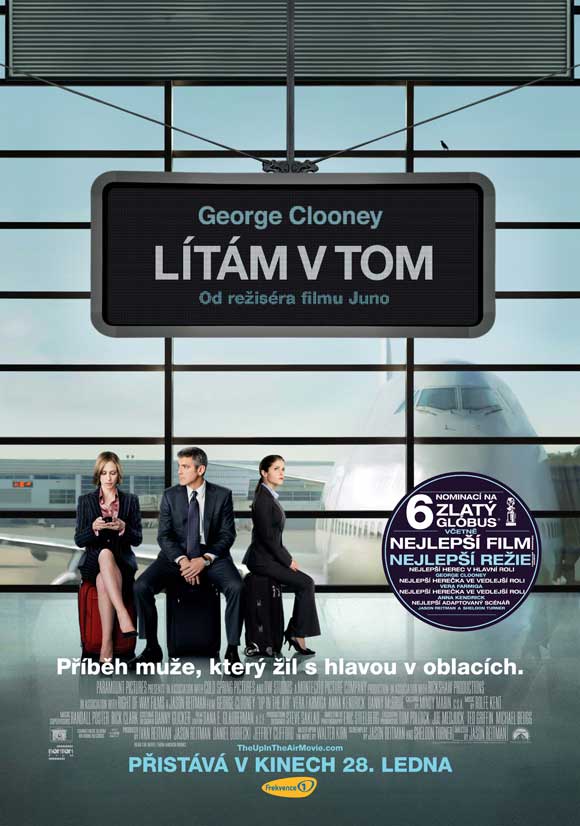
Up in the Air - Just saw this again after seeing it in the theaters back in December. Pretty mediocre when compared to Juno or Thank You For Smoking, Reitman's last films. I think some of the recognition of those films rubbed off on people when praising this. I got a lot of praise early on, but then by awards season that all died off. And for good reason. This is a nice movie and pretty entertaining mostly, but when put next to Hurt Locker or Avatar or even Precious, it just doesn't hold up. There are several themes running through it, and I don't think they meshed well together. Themes don't always have to be perfectly paired, but they have to at least go in the same direction. Half of the film was about the economy and firing people and how horrible it is, and the other half is about Clooney's disconnect from people. I guess on paper the two should go hand in hand; one is about disconnecting people by firing them and the other is about growing up and making real connections. But in the movie it just doesn't work. For that reason, I think the film only works on a superficial level of being just a story about a guy who travels a lot. Again, not a bad film, just not worthwhile.

Precious - Two things about this film. First, great performances by people you wouldn't think of. Monique, who is best known for her work on UPN, is the scariest mother since Joan Crawford, maybe scarier. And then Gaborey whatshername, a total newcomer. She carried this film like a true professional, she was really convincing, especially when you see her give an interview. And then, of course, Mariah Carey, the biggest surprise. Holy moly, I don't know how she did it, or how they convinced her to take off the make-up. Now we know what she looks like first thing on the morning.
The second thing is that I almost cried during the trailer, but never got near that during the film. Even at the end when Precious is crying and everyone is sad and it's all just so....sad. I was sad, but no where near tears. (Betsy cried.) But that trailer...oh man, I struggled to hold those tears in. Trailers are powerful. They can make Wolverine look good and make a robot cry. (I'm the robot, according to Betsy.)
So what does that actually say about the movie, though? It could have been better? No, I think it was as good as it could have been. The premise isn't entirely new, it's not breaking any ground. The film could have easily been turned into an after school special, which at times it felt like that, but as a whole is so much better than that. The film has so many really heartbreaking parts, the incest alone is a tough subject, but that's just one of so many problems the movie is tackling. Abusing the welfare system, child abuse, the failing inner city school system, racial tensions, it's all packed in here and it's never on the nose. The Best Adapted screenplay Oscar is well deserved.
But as happy as the ending was, I don't think it was. Precious still has a mountain to climb. Even without her mother crawling at her back(like the poster), in order for Precious to get out of the gutter she's going to have to work harder than anyone. And that's the true message I get from the film; how hard it is for average poor people to climb out of their social stigmas, let alone for someone like her with all the problems she has, and the two kids she has. That's what's really sad, is the state of affairs for so many people in this country growing up in a cyclical system that so easily repeats itself.

The Blind Side - And speaking of after school specials, here is another film that could have easily been shuffled off there.
Just like Precious, this film was great, and has some good things to say, but on paper the premise isn't exactly screaming major motion picture material.
But the film is still generally entertaining, which is surprising considering there isn't much in the way of a thorough plot. The actors have to carry it all, and for that reason alone, Sandra Bullock deserves praise. I don't think this was the best acting of the year, Bullock borders on caricature, but it's the fact that she is so compelling as the rich housewife. The guy playing Michael(the big guy in the poster) was pretty compelling also, and worthy of praise, since he was basically playing a silent giant. But when he beat up the drug guy and his crew, you finally saw the giant wake up and it was amazing. Chills ran down my spine, mainly because I was half asleep because of the slow plot, but also because it was awesome to finally see this guy wake up.
All in all, a heartwarming film about what it really means to be a mother and a Christian, and you're left feeling that there are people in the world doing some good. And what a sad state of affairs the American family is in when on Thanksgiving Day the family has 2 TV's set up in the living room, one for football, the other for video games. What have we become?

An Education - And now on to a film I rather enjoyed. But could it have been an after school special also? No, even though it's like a cautionary tale for teenage girls. My expectations of this were vastly skewed going into this. (Beware, major spoiler warning) Based on what I heard and thought, I thought that the older guy was one of her teachers and that he was taking her away from the boring school life and really teaching her about the world, which she couldn't get from school. I was partially right, he was giving her "an education," but not that kind of education.
It was because of going into this thinking he was in fact a good guy, trying to further help a talented student that when the truth was revealed, I was more shocked than anyone. Maybe it's also because I was so hoping for him to be who he said he was and because he was such a smooth operator, that he fooled me just as much as Carey Mulligan. I'm so glad I was never a well-read teenage girl or I would have been so duped.
This film had such a great look and tone, as if it was a European film from the 60's. The pacing was just about perfect and the acting so subtle. Everyone was so superb. Mulligan made such strong choices, she held back so many times in the movie, sometimes even her smile was enough to carry the scene. And then the dad. Oh, I felt so bad for him even more than Mulligan, in the end. He really had egg on his face. The scene when he's at the her door with the biscuits, it broke my heart. And then the douche of all douches. He got me, he really fooled me good. This whole film got me. I really loved it, as usual Nick Hornby turned in a great story. And of all the film on this review, I think this deserved to be nominated for Best Picture. Even if the list was only five.
Here is what I think the 5 Best Picture Nominees should have been.

An Education
The Hurt Locker
Inglorious Basterds (despite not seeing it)
A Serious Man
Avatar

Friday, April 16, 2010

Dark Comedy: Harold & Maude and A Serious Man

Dark comedy has always in some form existed in film. In fact, I would venture to say that comedy by it's nature is dark. We only perceive that it isn't when things end up alright in the end. But think about any joke before seeing the end result...it's at someone's expense or because of something going wrong. The old nickelodeons were usually comedy based. A series of unfortunate events would usually befall someone; they fell, they lost something, maybe a case of mistaken identity, or a dog ate their last hot dog leaving them hungry. All the way through the silent era comedy was black. But American sensibilities hated sad endings, and as a result, despite an entire film of misery the hero ends up alright. Virtually every Chaplin film follows that road of tragedy, until at the end he gets the girl and a warm hot dog in his belly.
But starting in the 1960's the film business started to change. Filmmakers began getting more freedom, partially from a ratings system giving them allowances but at a price of an R rating. Partially because of the absence of freedom on television, films could explore either sensitive ideas or could be more artistic, wanting to attract viewers that way. As well, the studio system was dieing. Ideas were coming from different sources and the development process drastically changed. In this atmosphere we see the growth of the dark comedy; chief among them....Dr Strangelove. (I'll eventually do a whole review for Dr Strangelove when we get to it on the AFI list.)
With the freedom that movies had, even comedies were free from some of the bounds put on them and they were able to explore the true nature of comedy...dark comedy. Just as Chaplin used the background of the depression for comedy's sake, films in the late sixties and early seventies used the backdrop of the insane world around them. The happy and content 50's were over. Singin' in the Rain could not have been made or accepted in 1969 the same way it was in 1952. (The number of musicals made in the late 60's was about half the number made on average in the 1950's and early 60's. And the ones that were made, were to pull people away from the TV to see a spectacle, and away from the tumultuous times.)
Enter Harold and Maude, which premiered in 1971, a remarkably landmark comedy. It's not the first black comedy, but it definitely set the tone for the coming years. It never mentions or delves into the social problems of the day. But throughout the film you can feel the subtext and know that the filmmakers were hinting at something larger than a macabre loving boy and a kooky old lady.
In Harold we have a privileged 19 year old boy not knowing how to communicate or live in his world. His one main interaction is with his overly involved mother. Harold enacts realistic deaths to hopefully freak his mother out, but she never buys into the presentation. However, they are gruesome to watch as an audience member. The first death is built up while the opening credits roll. He hangs himself just after we see his face for the first time. His mother enters and walks about nonchalant, then tells him when supper is. His next death, though you know at this point it's probably fake, is nonetheless startling to see, and you secretly think he might have actually killed himself this time. But when the mother walks in and sees blood everywhere and Harold all cut up, again she isn't swayed. Obviously he's been doing it a while and she's used to it, but for the first few times it takes some getting used to, even all the way to when he shoots himself, well into the movie.
So Harold delights in death and all things dark. But he finds humor and enjoyment in it, rather than a serial killer or sadistic person. And herein lies the first great metaphor. His favorite pastime, besides pretending to commit suicide, is attending funerals. Harold never actually does anything really sick, he only dabbles in the dark and deathly. It's as if death is so intriguing that it's sparked his curiosity in an unnatural way.
Vietnam was the first war where news was daily broadcasted visually from the front line. No war up to that point had brought war to the home through moving images. Previously, news came from newspapers or radio, if at all. Death was now a familiar thing to every family, whether they liked it or not. Adults had experienced some of it with previous wars and had either let it pass or naturally accepted it, but for the youth this was their whole world and nothing could help them deal with it properly. For them these gruesome images were mixing in with the suburban atmosphere of delight and delicacy, enough to change anyone's perspective on death; "how could I see death on TV and yet go for a bike ride in the park and eat blueberries with mom in the kitchen?" It almost doesn't make sense.
Vietnam was not the same war, these deaths were from a morally ambiguous conflict, which the youth for the most part were not advocates. Harold was darkly intrigued by death. He himself, never had to cope with it, but yet he brings himself to death much like society has done since the Vietnam war in the form of media attention. Think of the graphic nature of films and TV starting from the sixties until today. Violence on television and movies has gotten progressively more accepted and worse. And that all starts with the images of dead soldiers and caskets returning home during Vietnam. America has had a secret affair with death, but in a trivial way. Death is not real, it's something that happens to actors or over and over on video games. Somehow this is the way we accept death and cope with it. Harold never really understands death until it actually happens.
Which leads into the other half of the film; Maude. If Harold looks at death in a fun way, Maude looks at life in a frivolously dark way. She lives life everyday as if it's her last, which it very well could be since she's almost 80. But she does it in such a flippant, nuts to you, suck my balls, kiss my grits, up yours world kind of way. She cherishes everything and nothing at the same time. When Harold gives her a gift, she says it's the best gift she's gotten in a long time, then throws it in the lake. And that's her MO, life is so precious and awesome, but nothing really matters except fun, and you can't let the man keep you down, so do whatevs, because we're all gonna die anyway.
The film partially falls flat on her side of the black comedy. Her comedy in the film consists of stealing cars and messing with cops. It's all silly pranks that's she's playing in a nothin' to lose sort of way. She's trying to be so carefree that she has no rules, but in the process she's just pissing everybody off. Imagine Polly(from Along Came Polly) and Dharma (from Dharma & Greg) as an old lady on speed. Add in that's she may be a clepto and can't properly drive a car and you have Maude. It's this old lady that teaches shy little Harold how to live.
The film has garnered acclaim as one of the best romance comedies ever, but I have to grossly disagree. It's funny and dark that a 19 year and a 79 year old start a relationship, and it's nice that they can help each other, but for reals....a true romance garnering praise? Not in any way. Their romance is dark and icky. It serves only to further the juxtaposition of Harold's outlook on life. The film hints at her being a concentration camp survivor, which sheds light on her behavior. As Harold has only encountered death in a visually casual and ambiguous way(because TV is not an actual experience), she has been put through the bowels of death and come out on the other side physically and emotionally scarred. Death is an actual occurrence, and when it happens over and over the consequences resound. It is life that can be repeated and enjoyed, day after day. This is what she teaches Harold. And it's because she knows death so well, that it is a real thing, that she accepts it, and as well, pushes Harold to live it, when she says after he says he loves her, "That's wonderful. Go and love some more."
So what is Maude trying to tell Harold and his generation; Death will come, but in the meantime...

But with all that, Harold and Maude really isn't a complete black comedy. I think for a comedy to really be a dark comedy it needs a heavy dose of Schadenfreude. That's right, a good helping of old fashioned German humor. The Nazi's employed it in the 30's. But no one was laughing but the Nazi's, and since no one was laughing, they decided to declare war, out of spite.
Schadenfreude shows up in virtually every comedy. Something bad happens to someone in just about every comedy, and it's set up for a dark laugh. But usually, it's covered with some nice and neat resolution so you don't walk out of the theater upset with yourself. Duck Soup, Blazing Saddles, Annie Hall, Airplane, The Producers, Bringing Up Baby, The Odd Couple, all films at the top of AFI's Top 1o0 Comedies, each and every one despite not being a black comedy has some form of schadenfreude, where laughs are generated by the misfortune of the lead or someone the lead is messing with. (I'm looking your way Duck Soup.) What separates these films from dark comedy is the absence of punch lines and gags. Dark comedies rarely have these, or if they do, they center around something macabre. Like a kid pretending to kill himself to scare his mom.
The kings of this form of comedy have to be the Coen brothers. Their dark comedies are so dry and lacking of gags, they're like the Amish wandering in the desert.
Their most recent film A Serious Man employs this technique in it's whole structure. It's one long schadenfreude festival set to the theme of the biblical Job. It follows a Jewish father/husband, Larry, living in the mid-60's in middle America. Slowly his life falls completely apart. His wife wants to leave him, his son is smoking marijuana, his brother is a giant mess, and to top it all off a student of his is blackmailing him. Actually, to top it off his wife wants to remarry a family friend, Sy Ableman, and she kicks him out of the house.
What makes this such a wonderful comedy is that for everything bad that's happening, the Coens style lends you to laugh. The pitiful brother is my favorite part. I laughed every time he said from the bathroom, "Just a minute." No matter what happens to him, Larry keeps his head up. He just keeps getting stepped on and pushed aside. He's a schmuck and no one respects him, but he keeps on going. And for every "big problem," there are so many trivial things that he has to deal with that making any headway into his real problems is impossible. He has to go home to fix the antenna, he's got to help his brother, etc., etc.
I'm not doing the film any justice, but it's because there are so many things to discuss. There's also the Jewish cultural aspect. He visits 3 rabbis who offer no help to his problems. And then there's Sy Ableman, the real "Serious Man," to be compared to constantly. This aspect is actually the saddest because his faith is supposed to help him, but Larry finds no comfort or help from anyone in his faith. The first rabbi gives him trivial advice, the second gives me advice without any meaning, and the third won't even meet with him. He's blocked at every turn. It's as if even Hashim himself is against him.
He gets through it all, but as is the case with most dark comedies, whatever resolution comes is trumped by a bigger tragedy. A sad ending. Even though he gets through it, at the end of the movie he gets a fortuitous call from his doctor.
The film closes, though, on his son, who was having small problems of his own. He settles them, but the last shot of the film is of a looming tornado about to hit the school. It's not until the credits roll and you understand that that was the ending for it to make sense.
The film opens to an old Jewish folk tale being told relating to a curse. It alludes that maybe the couple in the tale are Larry's ancestors who brought a curse to the family. If so, that curse has followed down to Larry, and now the curse has been put onto his son, as minor problems solved a bigger one looms ahead.


The 12 Best Dark Comedies and their endings (From what I've seen)

12. Little Shop of Horrors (the plants could take over the world!)
11. Barton Fink (ambiguity is the darkest ending, is he in hell?)
10. A Serious Man (his son takes up the curse)
9. Adaptation (his brother dies, other people die, and he benefits)
8. Harold and Maude (Maude dies and Harold commits one last fake suicide)
7. Delicatessen (actually a happy ending, but people still get eaten thru it)
6. Disney's Ichabod Crane (Ichabod vanishes)
5. Sunset Blvd. (kind of a noir, but darkly comedic, he dies)
4. Election (Tracy Flick wins!!!!!)
3. Fargo (a lot of people die, for "just a little bit of money")
2. King of Comedy (he becomes famous)
1. Dr Strangelove (the whole world blows up)


Notable exceptions from what I haven't seen:
American Psycho, MASH, Death to Smochy, Heathers, Evil Dead 2, Very Bad Things, Sweeney Todd, Ghost World, Who's Afraid of Virginia Woolf?, Network

Thursday, April 15, 2010

I'm in love with Shakespeare in Love

Yes, I have never seen this film until now. It gets a lot of scorn because it beat out Saving Private Ryan that year for Best Picture. But you can't blame that on the film, it's not Shakespeare in Love's fault its so lovable. I smiled the entire time. My eyes were bursting with love, too. And no one was around to judge me for it.
This film is not entirely accurate. Most films aren't, even the historical dramas like Elizabeth have their historical flaws. But Shakespeare in Love is not in any shape or form a historical drama. It's a fantasy set in a mythical history. The film never makes claim to be anything more. Throughout are in-jokes to the world of Shakespeare's plays, and any actual historical facts or trivia are placed jokingly into the background or random dialogue. Many characters quote some of his works, like the preacher on the street and some of the other actors.
Then there are all the allusions to Shakespeare's plot devices. (Cross dressing, mistaken identities, ghosts, social duty, etc.) They were playfully sprinkled through the whole film, but always in a fun way. You're never slapped in the face with it. Any fan of Shakespeare would enjoy it more than upset from the trivialness of the movie.
And the writing is so good. Tom Stoppard is a master of his craft. (Read Rosencrantz and Guildenstern Are Dead if you are unfamiliar.) The whole film flows so wonderfully, I never tired or wore thin. I just can't speak high enough of this film. Sorry to Saving Private Ryan fans, that's a great film, too, but Shakespeare in Love stole my heart.

Wednesday, April 14, 2010

Queue Catch All #2

This last week, we've been watching a lot of Arrested Development, since Netflix put it on Watch Instant. It's just so hard to stop watching that show. I still found time (out of my ever so busy schedule) to watch some movies.

Barry Lyndon - I love Stanley Kubrick. I might have to say he's my favorite director. I think Dr Strangelove is the best comedy ever made(not the funniest movie, there is a difference) and Full Metal Jacket is the best Vietnam war film. I also think A.I. is a great film, but that's another topic if it should even be included in a Kubrick discussion.
But with all that, I didn't like this film. At all. It was slow and boring. If a movie is slow, it cannot be boring. If a movie is boring in any way then there is no helping it, no matter how much character or action or drama or beautiful shots. None of that matters if you have no interest in what's going on. Barry Lyndon I think was beautiful, based on what people have said and what Wikipedia led me to believe. But seeing how I was looking through the TV in a stare as if the movie was a 3D painting I couldn't tell that it was beautiful. Raging Bull is one of the best films of all time, but I'm not going to pop it on TV for funsy, it just isn't entertaining.
So Sorry, Stanley, please don't turn over in your grave, if that's where you're at. This movie just needed to be interesting. First of all, the main problem was that the character was just not likable. Usually, films centered around "social climbers" don't always have the most likable characters, but there must be something worth watching in the lead character; they have a talent, are witty, etc. But Barry Lyndon never showed us what to like. It's interesting to note, Stanley Kubrick was going to make a version of Vanity Fair, but there was a TV miniseries made when he was developing the idea, so he turned to the book this film is based on. Barry Lyndon follows a man in the late 1700's climb the social latter of Europe. Vanity Fair follows a women social climbing in 1800's England. The side note I want to make is that I fell asleep during the 2004 Reese Witherspoon version, so obviously these pictures aren't far apart. Basically Barry Lyndon is Vanity Fair with a man.
Besides not caring about the lead, I just could not get into any of it. Every scene started with either a super close up on characters that took 2 minutes for the camera to pull out to the whole scene, or the camera was super wide and took 2 minutes to zoom in on characters. And many times there was no dialogue to pass the time. Half the movie is taken up in the camera zooming in or out or panning to establish the scene. And since you don't care about the scene, why are you caring about all the setting up of that scene? Beautiful or not, this film is a waste of all of Stanley Kubrick's talent. The most interesting scene is when Barry beats his stepson at the piano recital. As always, action is story. And action is interesting. A step-dad beating his stepson is interesting.
P.S. - I picked the movie poster above because it reminds me of Baron Munchausen, a film with similar setting but couldn't be further in tone than Barry Lyndon.
I'll review The Adventures of Baron Munchausen in the near future, since I can't remember much of it, and it's on Watch Instant now.


Squid and the Whale - I should really like this film. I really should. But somehow I'm slightly offended. S&tW is hipster hogwash or arrogant intellectual propaganda, whichever sounds more elitist. This was written by intellectuals for intellectuals with a piss on everyone else. Jeff Bridges (and the whole cast) is an arrogant elitist, and he very well could be playing Noah Baumbach himself.
I just felt the whole time that Baumbach was patting himself on his learned back while he has all these "things" to say. The film just holds itself so high on a pedestal, but no one put it there. It reached its hand down and put itself on the pedestal.
I'll pause for a moment a make it known, that yes, I realize the family are indeed written as elitists. The parents pass that on to their children and everyone is elitist and living absurd, dysfunctional elitist lives. But my eyes are open. I can see through the film, right into the filmmakers and see that they, the filmmakers are nothing more than themselves elitists who think they're so smart and have these funny, interesting things to say. But this film doesn't have anything to say. It's not actually profound in any way. Don't be fooled. This film is for elitist intellectuals to talk about at cocktail parties and sound smart and cultured. But still see Fantastic Mr. Fox, Noah's heavy hipster hand is kept to a minimum by the true hipster king, Wes Anderson.

I'm Reed Fish - I almost shouldn't review this because I went in the other room for about 45 minutes while Betsy watched this. I also shouldn't because I hate reviewing bad movies, but I spent at least some time watching the beginning and the end, so why not spend a little more reviewing it.
I walked out when romance comedy plot point Number: Randomly bump into Love Interest happens. I knew at that point that there was no saving this cliched film. It not only follows the romance comedy plot, but more specifically it follows the Pre-Wedding Planning Romance Comedy. Spoiler Warning: He doesn't end up with the girl he planned on marrying, big surprise he ends up with his old high school friend who is back in town. I could go into all the other cliches, but instead I'll just complain about films that don't add anything new, even though they try.
The gimmick of this film (romance comedies at this point in time need a gimmick) is that Reed Fish makes a film about his love story. About 30 minutes into the film, the actual physical film, I mean like the film that goes around the projector, burns up and the film stops. At that point you realize you've been watching Reed Fish's film within a film. Sort of interesting. Kind of. But then it doesn't make much actual sense. While I was in the other room, Reed apparently came into money because his parents died, and he decided to make a film about his real life experience. So then...he used his friends and small town fellow citizens in the film. With a bunch of money to make a film, why not get real actors? Or a bigger question, how can small town hicks actually act so well?
So then at the end of the film, I mean the film the audience is watching, and by audience I mean Betsy and I, not the audience that is watching Reed Fish's film in the movie, which half of them star in. Sorry, I lost it. I'll start over. The twist in the end is that you're wondering who the person in real life is the girl in the movie that he harmed. But then you find out it's the girl who was his high school friend, not the girl he was supposed to marry. So you figure that out and then they get together in a meaningful way and the movie ends. (The movie the audience is watching, and by audience I mean us.)
That's I'm Reed Fish. Basic romance comedy. Too basic. Way too basic. The gimmick is just that, only a gimmick. Gimmicks don't make great films. Giant robots make great films.


10 Best Romance Comedies

10. Sabrina (1954)
9. Pretty Woman
8. (500) Days of Summer (To make Betsy happy)
7. The Philadelphia Story
6. Roman Holiday
5. The Shop Around the Corner
4. Breakfast at Tiffany's
3. My Best Friend's Wedding
2. Annie Hall
1. When Harry Met Sally

Monday, April 12, 2010

Nitsy's Next 10 on the AFI List

This next group of films on the AFI List is pretty epic. I don't mean like an awesome wave, I mean like there are "big and long" ones. (That's what she said.)
The Wild Bunch - 145 minutes
The Deer Hunter - 182 minutes
Dances With Wolves - 236 minutes
Ben-Hur - 212 minutes
Forrest Gump - 141 minutes
I figured going into Wuthering Heights that it would be another 3 hour thing, but in fact it's only 103 minutes. Hoorah. (Thank goodness, because we had to watch it on Youtube. Neither Netflix nor Blockbuster has it, despite it being out on DVD and on AFI's Top 100.)


80. The Wild Bunch - This was a film school favorite. I saw the opening sequence in my first screenwriting class. Then I saw it later for another class. For so many reasons this film is great. (Betsy didn't care so much for it, but that's because she didn't give it a chance. And she hates violence.) From the story to the cinematography to the acting. It plays the "one last big grab" storyline so perfectly. It's hard to tell exactly how much the film has influenced based on that alone, but even films out of the genre benefit from The Wild Bunch having been made. The other great influential piece of the film, that has shown up in cinema ever since, is the vagueness of herocism. These are the protaganists, but are they the good guys? They aren't, but yet we love 'em. Before this film, justice had to be served. Whether it was a noir, gangster pic or western; the bad guys were either killed by the good guys or they get taken away. In The Wild Bunch, the bad guys kill and get killed by the worse bad guys. And in fact, the "good guys" are nothing but thieves and idiots.
Incredible! This film works in the genre so much, but yet turns it on it's head. The film has garnished so much praise that I can't come close to writing a full report on this legendary film.


79. The Deer Hunter - And then there's this. I'm going to rant a little bit, so if you don't like it, go in the other room or skip down to my review of Rocky. What do Broken Embraces, The Deer Hunter and Million Dollar Baby have in common? 1. I hate all of them, 2. Reviewers seem to love them, 3. People find meaning in their absence of substance, 4. they are all, in fact, dumb movies.
Yeah, I'm going to say it...The Deer Hunter is a dumb movie. "Oh but, it's an epic war movie about the realities of war and life and...." Shut up! There is one war scene. 1! So that's one thing. Realities of war? No. There has never been evidence or any factual accounts of the Vietnamese forcing prisoners to play Russian roulette. As well, this film should get the award for worst editing of all time. 182 minutes. That's over 3 hours, and there is 1 battle scene? Why do we have to see 45 minutes of a wedding and only get 3 minutes of war? You want to talk about the realities of war? How about the realities of the boring nature of Pennsylvania? Michael Cimino and whoever edited this picture, we get it. Life is good before war and everyone is happy dancing and drinking....but really, how many shots do we need of the wedding reception? Every movie in the history of cinema it seems has a wedding in it, so yeah, we the viewing public know what a wedding, and the reception that takes place afterward, is like. What we're curious about is how Robert DeNiro fights in Vietnam. (I hate that DeNiro is in this film, because he's actually really good, as usual.) And let me just say one more thing concerning the Hollywood press in the last seventies. You were all tricked. The film proves that you're all idiots on an "epic" scale, because you were fooled into thinking that because this film was sooooo EPIC, it must be sooooo meaningful. I'll give you some meaning from Mr Shakespeare. Brevity is wit. So that means The Deer Hunter is crap.


78. Rocky - Ahhh, I love this film. I almost want to take some time and get away from the Deer Hunter, but no, to whip my mind clear of Deer caca, I will review the greatest boxing movie of all time. But Rocky is more than a boxing movie. It's a movie about America. Rocky is America. This is an American Myth tale.
The seventies were a sucky time. Vietnam, Nixon, bell-bottoms, disco. It took till about 1985 for the 80's to completely shed the 70's off. (Just look at baby photos from the early 80's if you don't believe me.) Amid all this mess was a little lowly boxer. He was doing his best to make it and live up to his dreams, but he was struggling. He did some things he wasn't proud of, but through it, he kept some of his ideals and kept his chin up. Then he gets a shot. A shot to fight the reigning champ. So Rocky pulls all his raw talent together and works harder than he's ever worked before. And he goes the distance with Apollo. Even the name is meaningful. Rocky, a mortal man, is fighting a God. Don't we as Americans think we can do that? If not me or you, then anybody can have that chance. We're all equal. And then, Rocky losses. And of course he would, because he's fighting a seemingly immortal man. But he lasted with him. And after it's all said and done, and Apollo, having come close to dieing(remember, he's immortal), is cheering that he won, all Rocky wants is Adrian. It brings tears to my eyes and a lump to my throat just thinking about it. If you want to find a film that shows what it means to be American, I can think of none better than Rocky.

77. American Graffiti - I hate that this movie is on the AFI Top 100. Not that I hate this film, I like it, but I just don't think it should be on here. I understand that it was different and unique, but does a new flavor of cotton candy make the headlines? No. I'm a Lucas fan, no one defends the prequels like I do, but American Graffiti? Really? It's just a bunch of kids. I'll list 10 movies with kids that are better than this. Stand by Me. Ferris Buehler's Day Off, Breakfast Club, The Goonies, 10 Things I Hate About You, Clueless, Sixteen Candles, The Sandlot, Brick, Mean Girls.
But notice one thing...American Graffitti came first. (Unless I listed Rebel Without a Cause, which I could have listed here.) So perhaps AG was pretty influential. Just about every movie since has used some modern sountrack, from Pulp Fiction to The Hurt Locker. That was rather unique and the closest film I can think of that did that was The Graduate. But in the Graduate the songs are all by one artist and fit into the movie. Whereas in American Graffitti the songs are varied and contemporary to the time period. But all in all, should this be the only reason it's included among America's best films? If the list was just a general outline and consisted of hundreds of films then sure. But to say that this is the 77th greatest American film of all time? No way, Jose.

P.S. The "What Happened to Them" at the end was utterly retarded. Dumber than Jar Jar or the Ewoks.

76. City Lights
Another Chaplin film. And there's still another to come. Charlie Chaplin was a comic genius. Undeniable. But 3 of his films on here? I'm glad they rectified the absence of silent comics with their revised list. (The General and Sunrise make the revised list.) Putting Modern Times on the list to me is a given. I think it's his best one, it goes beyond his usual slapstick, tramp lost in the world type of film to make real social commentary. So, perhaps I could see them voting in a second of his films that would represent all his films. I guess that should be City Lights. It is so run of the mill it fits the role. He's a homeless tramp in the city, he doesn't fit in with the rich and he wins the heart of a flower girl. In a way, that's kind of all his films. There may be a study out there that tracks Chaplin's joke history from film to film, but I don't have the time or inclination to study him. So without that knowledge I'm left to watching the film as is, not knowing what jokes came before or what came after. With that, it seemed liek City Lights was just another Chaplin film. There was nothing special about this. He messes about, somehow becomes friends with a rich guy, almost falls into the sewer backwards...so what. It's been done before...by him! It's not like he's hanging from a clock tower, almost getting crushed by a falling wall, or chasing down moving trains...those gags are too low brow I guess. No, Charlie stuck to what he knew worked...waddling and almost falling backwards into a hole.

75. Dances with Wolves
I'll save the bulk of this film for an
Avatar vs Dances with Wolves review. I'll just say one thing. I hadn't seen this film in at least a decade and watching it again was like a breath of fresh air. It was like Waterworld never happened.


74. The Gold Rush
Chaplin again? Oh man. Abbott & Costello, Frankenstein, Earnest, Godzilla. All these characters made multiple movies, some of them pretty good. They also made movies about these characters where they took them out of their element and put them somewhere unique to see what happens, and generate fan interest. Like when the Brady Bunch goes to Hawaii. Does Charlie Chaplin's Tramp ever do that? Yes, he does. But instead of meeting the Mummy or fighting the Wolfman or King Kong, the Tramp leaves the city to go to.....the Yukon! What if the Tramp was a gold miner? Yeah! Basically, The Gold Rush follows the same plot as the other Chaplin films, except he's in a different location. 1. He's down and out 2. he's in conflict with the rich 3. He wins the heart of a boy

ish-type girl.
What can you say about this film that couldn't be said of all his others? It's the same themes over and over again, and since he did that better with City Lights or Modern Times why does this have to be here? "Oh because the set pieces and the yadda yadda..." Really? Because he built the Yukon on his backlot and pretended his cabin was falling off a cliff it deserves a place in America's top 100 films?
Two notable things that were actually unique and funny.....the bread roll dancing scene and the Tramp eating a shoe. Suck it Buster Keaton, you never ate your shoe! See this interesting article talking about Chaplin and Keaton's eating habits.
http://www.highbeam.com/doc/1G1-71712168.html


73 Wuthering Heights - So weird that this movie, despite being on DVD, couldn't be found anywhere....except YouTube. Someone painstakingly put this entire film, in 11 parts, onto YouTube. And to that person...thank you.
I don't go much for the Jane Austen/Emily Bronte literature, but this wasn't all that bad. I think because they slimmed it down to under 2 hours. It follows all the themes of those books; class struggles, love affairs, unrequited love, marrying someone you don't love, the poor guy that gets rich. It's all in here. But not in the usual BBC way, where there are grand scenes with tons of dialogue and conversations. Here, less is more, which is great. What's left is the classic lines from the book that are repeated by women to this day. I'm not entirely sure, though, why this film is on AFI's list. Is it because it's so trim and to the point? If so, that makes it unique when compared to other films on the list with epic running times. Besides the brevity, the acting was decent for it's time (a young Laurence Olivier), the cinematography was pretty good (Gregg Toland), and...that's all I have to say about this movie. I probably won't ever see it again.

72. - Ben-Hur - I was so glad to see this again. I've always loved it, but haven't seen it in a few years. I think of all the really epic films ever made, this perhaps is the best.
The chariot race alone should put this on the list. I mean when an urban legend arises that people died on camera, you know it's great.
The film is thoroughly deeper than that, though. It's remarkably religious, besides even the scenes with Christ around somewhere. It's about a Jew stuck in the real world. He has one foot in the world and one foot in his beliefs and he's always fighting to maintain that balance. He never quit goes over to the world side, despite being tempted time and again; first by his best friend the new Tribune, then he's given the inheritance of a rich Roman, later he's offered Roman citizenship. One of the big themes of Christianity is being in the world, but not of the world. Ben-Hur is set right at the dawn of Christianity. But this theme is also found in other religions, of course.
The best thing about the religious themes in Ben-Hur is that it never overdoes it. It's neither shoved down your throat or handed to you on a perfect platter. They're done subtly. (Usually. There is the interactions with Jesus and the water.) The film is more about living in a conquered world and still being free. The Romans have conquered the Jews, who now feel the burden of subjugation, but yet the Jews themselves have slaves.
Throughout the film, motifs are presented that show this idea of being enslaved. Esther wears a ring to show she is a slave, then Judah wears it. Later he wears the ring of Arrius, the rich Roman Consul. Judah later returns the ring to Pontius Pilate when offered citizenship. Again, all this is playing out while Jesus is dieing to free the world from the subjugation of sin. There are many more symbols and themes throughout, but all of it just shows how deep this film is. It gets overlooked because people think it's too on the nose, but those same people fail to see beyond the Christ scenes presented through the film, to the real messages in Ben-Hur's struggles.

71 - Forrest Gump - People either love or hate this film. It's one of those dividing movies where either you can't stand Gump or you accept him and go along for the ride on the feather. I like the film, and by extension I like Forrest. In real life I don't know how I would feel, but Gump is nice, humble, loyal and courageous. Everything you want in a dog.
And I like dogs, so it's okay. A study should be undertaken to see the correlation between people who hate this film and those that hate dogs. My hypothesis is that they are the same people.
This movie takes a huge risk. (But it can't help but take it, since it's based on a novel, so it has to basically follow the novel's plot.) It weaves through history, sometimes affecting their outcome. When movie do this it's usually a disaster. (i.e. Shanghai Noon). But somehow with Gump, they weave it so perfectly and finely that you never get annoyed with it. And that leads into the theme and most profound piece of dialogue in the film. He says it at the end to Jenny's grave, "I don't know if we each have a destiny, or if we're all just floating around accidental-like on a breeze, but I, I think maybe it's both. Maybe both is happening at the same time." The movie opens and closes with a feather floating through the wind. Throughout the film Forrest himself breezes along as if being blown by the wind. But throughout, he also affects the outcomes of things and sometimes even follows his own wishes and desires. The same goes for Jenny, as she stumbles from place to place not ever finding a solid footing, she herself is blown from place to place. But Forrest is always her constant, she finds footing with him. So the movie leaves the question open, how much do we control in our lives and how much is destiny, or if not destiny then just chance. Because through it all there are still constants; disasters happen, people die, and the world keeps moving, whether we're involved or not.